Thursday, June 28, 2012
Friday, May 18, 2012
KisselKars and Wagenhals
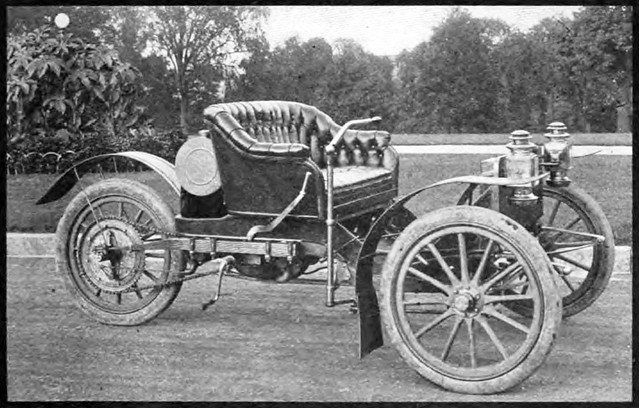
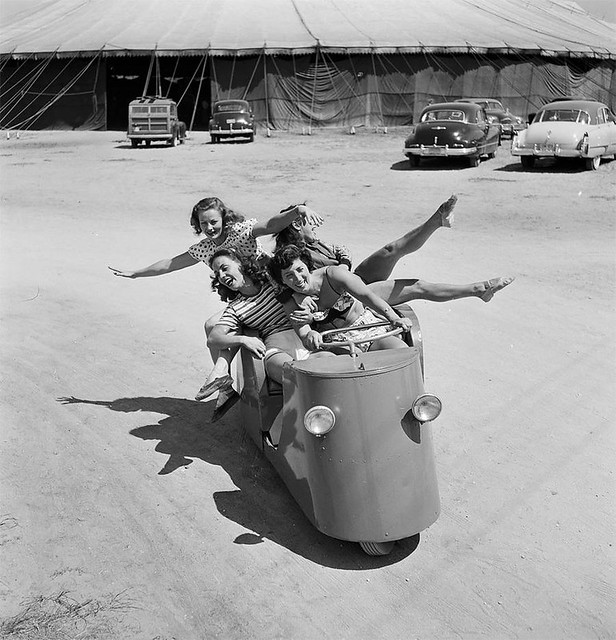
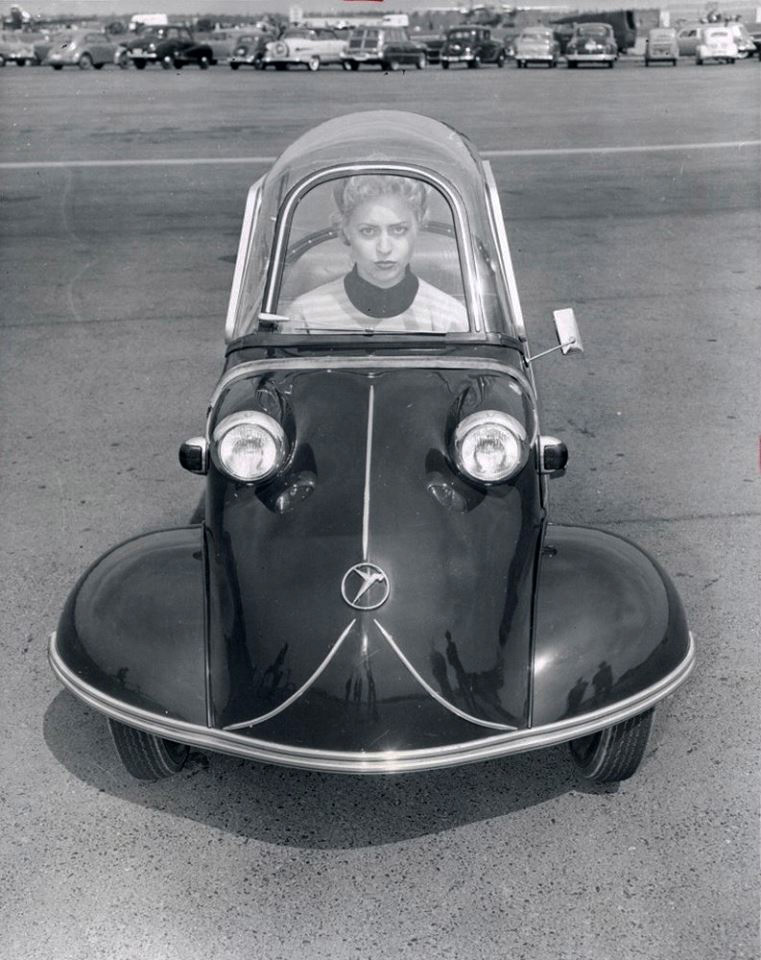
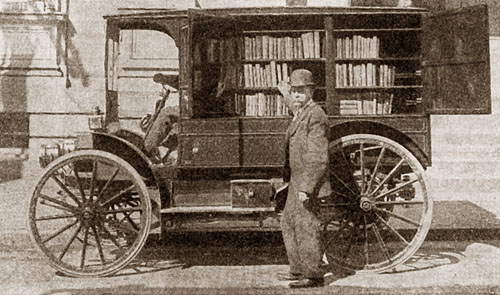
My latest post over on Shorpy's—this on a KisselKar truck and a bit on the Wagenhals three-wheeler—can be found here.
Labels: Kissel Kar, KisselKar truck, three-wheeled, three-wheeler, Wagenhals
Wednesday, May 16, 2012
Where have all the books gone?
Regular readers (and I thank both of you) will notice that some 76 book posts have disappeared. I have moved them to my book site which will still be known as On The Nightstand. That is where I will keep the running list of what I have read, plus I'll be adding reviews and links to purchase.
So instead of cluttering up this site, I'm just listing what I am currently reading—and that can be found in the sidebar to the right--->
Saturday, March 17, 2012
Even though the General Motors bailout loans have supposedly been paid back (not by the company itself, but rather through proceeds from the November, 2010 IPO), the U.S. Treasury (we the taxpayers) still owns about 25% of that corporation. Last year PSA Peugeot Citroën's auto making division lost $123 million, so naturally GM just bought 7% of their stock for $400 million (the Peugeot family is still the largest stockholder) because - hey, we just don't have enough Peugeot mopeds here. GM thinks that everyone can save a bundle through platform sharing—think of the new Chrysler based Lancia Thema and Lancia Voyager.
While I'm on the subject of Chrysler—that now non-American company of which Fiat owns a majority interest—all those European Themas and Chrysler 300C sedans are built in Graz, Austria by Magna Steyr. And they are available there and in Australia with a Mercedes-Benz designed 3.0 L V6 diesel engine, which is not available here. The Chrysler 300s that we can get here—you know, "Imported from Detroit"—are made in their Brampton factory in Ontario, Canada, and even then some of the engines come from Mexico. The European Lancia and Chrysler Voyagers are also built in Ontario, Canada, and have a VM Motori of Italy double overhead cam common rail design diesel engine as standard. Tell me again how much of the Chrysler bailout is helping American workers.
No matter what you think of the bailout, in the final analysis it allowed those companies to dump billions of dollars of legally owed debt, renege on contracted labor obligations, cancelled pending lawsuits by car-accident victims and even removed legal responsibility in cases where the victims had actually won damages (Wall Street Journal report). Given all that, one of the most egregious affronts was the stripping of the property of legal bondholders (much of it held in retirement portfolios), which was then given to union-controlled trust funds without rhyme or reason—or perhaps it was their payoff for not fighting the contract cancellations. Another outrage was the illegal contract terminations and subsequent dropping of targeted dealerships, with GM and Chrysler claiming the right to confiscate the dealership customer lists and service records. Illegal? Some of those ex-dealers who had the temerity to sue individually or in small groups, have been winning in arbitration or court. A massive class-action suit is still winding its way through the system.
There are those in the know who believe that both companies—as well as the country as a whole—would have been better off if a reorganization bankruptcy had taken place through the normal channels. Chrysler would still be an American company (again) and much the same result could have been negotiated with either settlements or structured payments going to the thousands upon thousands of ordinary Americans who now have been left with nothing to show for their investments, years of hard work, or pain and suffering.
And the takeaway is that we the taxpayers (U.S. Treasury) still lost around $14 billion in the whole mess.
Oh well, maybe they'll rebadge the Chevy Volt and there'll be a nice Citroën Électricité coming soon to a showroom near you...or not so near you, if you live in one of those areas that lost the only dealership for miles around. Because—like everything else that's going on—the Volt is working out so well.
While I'm on the subject of Chrysler—that now non-American company of which Fiat owns a majority interest—all those European Themas and Chrysler 300C sedans are built in Graz, Austria by Magna Steyr. And they are available there and in Australia with a Mercedes-Benz designed 3.0 L V6 diesel engine, which is not available here. The Chrysler 300s that we can get here—you know, "Imported from Detroit"—are made in their Brampton factory in Ontario, Canada, and even then some of the engines come from Mexico. The European Lancia and Chrysler Voyagers are also built in Ontario, Canada, and have a VM Motori of Italy double overhead cam common rail design diesel engine as standard. Tell me again how much of the Chrysler bailout is helping American workers.
No matter what you think of the bailout, in the final analysis it allowed those companies to dump billions of dollars of legally owed debt, renege on contracted labor obligations, cancelled pending lawsuits by car-accident victims and even removed legal responsibility in cases where the victims had actually won damages (Wall Street Journal report). Given all that, one of the most egregious affronts was the stripping of the property of legal bondholders (much of it held in retirement portfolios), which was then given to union-controlled trust funds without rhyme or reason—or perhaps it was their payoff for not fighting the contract cancellations. Another outrage was the illegal contract terminations and subsequent dropping of targeted dealerships, with GM and Chrysler claiming the right to confiscate the dealership customer lists and service records. Illegal? Some of those ex-dealers who had the temerity to sue individually or in small groups, have been winning in arbitration or court. A massive class-action suit is still winding its way through the system.
There are those in the know who believe that both companies—as well as the country as a whole—would have been better off if a reorganization bankruptcy had taken place through the normal channels. Chrysler would still be an American company (again) and much the same result could have been negotiated with either settlements or structured payments going to the thousands upon thousands of ordinary Americans who now have been left with nothing to show for their investments, years of hard work, or pain and suffering.
And the takeaway is that we the taxpayers (U.S. Treasury) still lost around $14 billion in the whole mess.
Oh well, maybe they'll rebadge the Chevy Volt and there'll be a nice Citroën Électricité coming soon to a showroom near you...or not so near you, if you live in one of those areas that lost the only dealership for miles around. Because—like everything else that's going on—the Volt is working out so well.
Wednesday, March 07, 2012
The Last Trap
Updated 4/9/12

Retired Naval Aviator Captain Carroll LeFon. From instapinch.com.
Neptunus Lex, one of my favorite bloggers, has died doing what he loved best. A retired Naval Aviator, Captain Carroll "Lex" LeFon had commanded an F/A-18 squadron and had served as XO at TOPGUN. As a civilian he qualified on an Israeli F-21 Kfir and was flying opposing force missions at TOPGUN in Fallon, Nevada yesterday, when he crashed. The Best being trained by the Best-of-the-Best. I never met him, but it was my plan to buy him a Guinness the next time he traveled through Las Vegas. Nothing I say could ever say about him could be as eloquent as the heartfelt words of his fellow milbloggers. Just suffice it to say that he was greatly admired and greatly loved.
Go to his blog here and hit the tip jar (or glass in this case) to help out his family. And if you live in San Diego or plan to be there sometime, drop by the Shakespeare Pub and hoist a pint of Guinness in his memory.
Memorial Updates for Captain LeFon:
The bulk of memorial services—be they planned or impromptu, formal or informal—are over. Gatherings of two or more from San Diego (with his family) to Boston, from D.C. to Idaho, from the SF Bay area to Flordia, took place Friday and Saturday nights. Hundreds more of us stayed at home either alone with our thoughts or taking part in an unprecedented online wake/memorial service. It was two nights filled with love, praise, and tears. Plans for permanent remembrances were made, and a few surprises popped up. A small group remembering Neptunus Lex at a restaurant was surprised when another group stood to toast Capt. LeFon. During the online cyberspace memorial service a Las Vegas blogger discovered another blogger living just a few blocks away. At the appointed time hundreds of them all across the country lifted their glasses and toasted the Good Captain. For Strength.
The funeral services for Neptunus Lex were held at Fort Rosecrans National Cemetery in San Diego, on March 27 at 1 p.m. The military service ended with a section flyover by a F/A-18 Hornet and a F-21 Kfir.
The Neptunus Lex Honor Roll
(If I've missed any, please let me know.)
170 Notices and Tributes that have been made by:
The Lexicans
Instapinch
Steeljaw Scribe
CDR Salamander
The Woodshed
AW1
Bring the Heat, Bring the Stupid
Outside the Beltway
Blackfive
Navy DyberSpace Blog
Jonah Goldberg at The Corner
The Tailhook Association
Chicago Boyz
Susan Katz Keating
Redstate
War News Updates
Lawyers, Gun$ and Money
PJ Tatler
Bookworm Room
blonde sagacity
The Kitchen Dispatch
Bob Owens
24 Hour Campfire
XHouse of Eratosthenes
Stanislaus GOP
Twitchy
baldilocks
Thoughts and Rantings
NorthEast – Tea Party Patriots!
Theo Spark
Castra Praetoria
Scout
Thunder Pig
Stormbringer
Weaponsman
daylife
The Thunder Run
Liberal Whoppers
Brain Shavings
365 Veterans
Battleland
Aviation Forum
Morning in Arizona
Naval Open Source INTelligence
PPRuNe
silobreaker
Op For
Milblogging
Among The Joshua Trees
Network54
From My Position...On The Way!
Da Goddess
Brown Hound
The Sniper
Carmichael's Position
@Evil
Grim's Hall
Soldiers' Angels Germany
Killpoets
Aliens in This World
Aviation Week
Navy Times
Argghhh!!!
Bouhammer's Military Blog
Homefront Six
The Sandgram
Technicalities
This Ain't Hell
Villainous Company
Eagle Speak
Not Exactly Rocket Science
Fuzzilicious Thinking
U.S. Navy Aircraft History
Little Drops...
Boudicca's Voice
Doc In The Box
Miserable Donuts
Ace of Spades
Information Dissemination
The Political Conundrum!
Truth, Lies and in Between
Cold Fury
On the North River
SOH
The Mellow Jihadi
Parrothead Jeff & Friends
No Runny Eggs
Newsodrome
Instapundit
US Navy Jeep
The World According to Me
U.S. Fleet Forces Command Blog
Exile in Portales
Hog Day Afternoon
Noodling On It
Brain Shavings
Silicon Valley Redneck
Lignes de défense
Jeopardy in MD
The Free Republic
Old Retired Petty Officer
Home on the Range
Navy Cyberspace Blog
BaseOps Forums
Backcountry Pilot
KahunaSniper
The Best Defense
Bull USA
Agricola
Just an Earth-Bound Misfit, I
little green footballs
Akron Forum
Horseman Zero
threedonia
Adonai is Semper Fi
Network 54
India Times
My Blog
Ramblings from a Blue Dot
Bayou Renaissance Man
Assoluta Tranquillita
Liberty Republican Forum
Mudville Gazette
The Conservatory
Overseas Civilian Contractors
Air Pouge
Windows IT Pro
memeorandum
ARC Forums
Musings
SIGforum
Questions and Confirmations
Pilot Online
Sowards for Senate
Noozilla
Skippy Maximus
A Blog for Dallas Area Catholics
Pirate's Cove
The Hokey Pokey IS What It's All About
The Minuteman
A Girl and Her Gun
The View From Under The Desk
The Flight Deck
Free Falling
Maggie's Farm
Google Groups
USS Bennington - (PG4)
daylife
blogrunner
Smith & Wesson Forum
Random Acts of Patriotism
One step at a time
Tomcat Sunset Forum
Military Times
Bryan Strawser
Bloomberg Businessweek
America in Uniform
The Online Temple of Chris Parkes
Bad Ju Ju
Foreign Policy
Mongo Talk Blog!
Shots From The Hip
Danger Room (Wired)
Lahontan Valley News
Chant du Départ
The U.S. Naval Institute blog
Here
Here
Here
From the SecNav
Here
From the CEO, U.S. Naval Institute
Here
From Airborne Tactical Advantage Company
Here
A website for Neptunus Lex's friends and fans has been created:
The Lexicans
The Neptunus Lex Group on Facebook now has 396 members.
Whisper's Open Thread on the Neptunus Lex website itself has, at this writing, collected 1,655 tributes, comments and condolences.

Neptunus Lex, one of my favorite bloggers, has died doing what he loved best. A retired Naval Aviator, Captain Carroll "Lex" LeFon had commanded an F/A-18 squadron and had served as XO at TOPGUN. As a civilian he qualified on an Israeli F-21 Kfir and was flying opposing force missions at TOPGUN in Fallon, Nevada yesterday, when he crashed. The Best being trained by the Best-of-the-Best. I never met him, but it was my plan to buy him a Guinness the next time he traveled through Las Vegas. Nothing I say could ever say about him could be as eloquent as the heartfelt words of his fellow milbloggers. Just suffice it to say that he was greatly admired and greatly loved.
Go to his blog here and hit the tip jar (or glass in this case) to help out his family. And if you live in San Diego or plan to be there sometime, drop by the Shakespeare Pub and hoist a pint of Guinness in his memory.
Memorial Updates for Captain LeFon:
The bulk of memorial services—be they planned or impromptu, formal or informal—are over. Gatherings of two or more from San Diego (with his family) to Boston, from D.C. to Idaho, from the SF Bay area to Flordia, took place Friday and Saturday nights. Hundreds more of us stayed at home either alone with our thoughts or taking part in an unprecedented online wake/memorial service. It was two nights filled with love, praise, and tears. Plans for permanent remembrances were made, and a few surprises popped up. A small group remembering Neptunus Lex at a restaurant was surprised when another group stood to toast Capt. LeFon. During the online cyberspace memorial service a Las Vegas blogger discovered another blogger living just a few blocks away. At the appointed time hundreds of them all across the country lifted their glasses and toasted the Good Captain. For Strength.
The funeral services for Neptunus Lex were held at Fort Rosecrans National Cemetery in San Diego, on March 27 at 1 p.m. The military service ended with a section flyover by a F/A-18 Hornet and a F-21 Kfir.
The Neptunus Lex Honor Roll
(If I've missed any, please let me know.)
170 Notices and Tributes that have been made by:
The Lexicans
Instapinch
Steeljaw Scribe
CDR Salamander
The Woodshed
AW1
Bring the Heat, Bring the Stupid
Outside the Beltway
Blackfive
Navy DyberSpace Blog
Jonah Goldberg at The Corner
The Tailhook Association
Chicago Boyz
Susan Katz Keating
Redstate
War News Updates
Lawyers, Gun$ and Money
PJ Tatler
Bookworm Room
blonde sagacity
The Kitchen Dispatch
Bob Owens
24 Hour Campfire
XHouse of Eratosthenes
Stanislaus GOP
Twitchy
baldilocks
Thoughts and Rantings
NorthEast – Tea Party Patriots!
Theo Spark
Castra Praetoria
Scout
Thunder Pig
Stormbringer
Weaponsman
daylife
The Thunder Run
Liberal Whoppers
Brain Shavings
365 Veterans
Battleland
Aviation Forum
Morning in Arizona
Naval Open Source INTelligence
PPRuNe
silobreaker
Op For
Milblogging
Among The Joshua Trees
Network54
From My Position...On The Way!
Da Goddess
Brown Hound
The Sniper
Carmichael's Position
@Evil
Grim's Hall
Soldiers' Angels Germany
Killpoets
Aliens in This World
Aviation Week
Navy Times
Argghhh!!!
Bouhammer's Military Blog
Homefront Six
The Sandgram
Technicalities
This Ain't Hell
Villainous Company
Eagle Speak
Not Exactly Rocket Science
Fuzzilicious Thinking
U.S. Navy Aircraft History
Little Drops...
Boudicca's Voice
Doc In The Box
Miserable Donuts
Ace of Spades
Information Dissemination
The Political Conundrum!
Truth, Lies and in Between
Cold Fury
On the North River
SOH
The Mellow Jihadi
Parrothead Jeff & Friends
No Runny Eggs
Newsodrome
Instapundit
US Navy Jeep
The World According to Me
U.S. Fleet Forces Command Blog
Exile in Portales
Hog Day Afternoon
Noodling On It
Brain Shavings
Silicon Valley Redneck
Lignes de défense
Jeopardy in MD
The Free Republic
Old Retired Petty Officer
Home on the Range
Navy Cyberspace Blog
BaseOps Forums
Backcountry Pilot
KahunaSniper
The Best Defense
Bull USA
Agricola
Just an Earth-Bound Misfit, I
little green footballs
Akron Forum
Horseman Zero
threedonia
Adonai is Semper Fi
Network 54
India Times
My Blog
Ramblings from a Blue Dot
Bayou Renaissance Man
Assoluta Tranquillita
Liberty Republican Forum
Mudville Gazette
The Conservatory
Overseas Civilian Contractors
Air Pouge
Windows IT Pro
memeorandum
ARC Forums
Musings
SIGforum
Questions and Confirmations
Pilot Online
Sowards for Senate
Noozilla
Skippy Maximus
A Blog for Dallas Area Catholics
Pirate's Cove
The Hokey Pokey IS What It's All About
The Minuteman
A Girl and Her Gun
The View From Under The Desk
The Flight Deck
Free Falling
Maggie's Farm
Google Groups
USS Bennington - (PG4)
daylife
blogrunner
Smith & Wesson Forum
Random Acts of Patriotism
One step at a time
Tomcat Sunset Forum
Military Times
Bryan Strawser
Bloomberg Businessweek
America in Uniform
The Online Temple of Chris Parkes
Bad Ju Ju
Foreign Policy
Mongo Talk Blog!
Shots From The Hip
Danger Room (Wired)
Lahontan Valley News
Chant du Départ
The U.S. Naval Institute blog
Here
Here
Here
From the SecNav
Here
From the CEO, U.S. Naval Institute
Here
From Airborne Tactical Advantage Company
Here
A website for Neptunus Lex's friends and fans has been created:
The Lexicans
The Neptunus Lex Group on Facebook now has 396 members.
Whisper's Open Thread on the Neptunus Lex website itself has, at this writing, collected 1,655 tributes, comments and condolences.
Labels: Captain Carroll LeFon, Carroll LeFon, Naval Aviation, Neptunus Lex
Saturday, January 28, 2012
The Beginning of the End
The De Dion-Bouton Steam Bogie, Part 3
Part 1 here
Part 2 here

From Tramways et Automobiles (Tramways and Automobiles), Eugène Aucamus and Louis Galine, 1900.
1896 appears to have been the pinnacle year in terms of development of the De Dion-Bouton Steam Bogie. Most subsequent engineering efforts would be geared towards stand-alone steam omnibuses and trucks, and especially towards gasoline automobiles. But for now the popularity of the Steam Bogie was at an all time high. The Steam Wagon and Steam Brake that were entered in the September, 1896 Paris-Marseilles-Paris race noted in the last post, were essentially converted Steam Bogies. The smaller Steam Wagon that the Count de Dion drove was based on the De Dion-Bouton Steam Bogie Pattern No. 1, which weighed in at 4,400 lbs., and could haul a 2,640 lb. load at 12.5 mph. The heavier Steam Brake driven by the Marquise de Chasseloup-Laubat was based on the De Dion-Bouton Steam Bogie Pattern No. 2, which weighed 8,800 lbs. and could haul a 22,000 lb. load at 8 mph. Converted to stand-alone vehicles, both were considerably faster without trailers as evidenced by the Count de Chasseloup Laubat’s win with the larger Steam Brake in the late January, 1897 Marseilles-Nice-Monte Carlo race (which, as noted in last post, is today referred to as the Marseille-Nice-La Turbie race), and with De Dion-Bouton’s factory entry in the 106 mile Paris-Dieppe race on July 24, 1897, where the smaller Steam Wagon came in First-in-Class and Second-Overall.
The De Dion-Bouton boiler was smaller than most of its contemporaries, but it was extremely capable. It had a heating surface of 22.76 sq.ft., and a grate area of 1.86 sq.ft. This was sufficient to steam around 6 pounds of water per pound of coke, which was more than enough to power an 18 hp steam engine — a remarkable feat considering that the boiler weighed in at only 528 pounds empty, making it one of the most efficient of its day. The steam fed a compound steam engine (Figs. 35 and 36 below) with a large cylinder that had a diameter of 7.08 inches and a stroke of 5.11 inches. The small cylinder was 4.72 inches. The volume of each individual cylinder was worked out so that each was putting out the same amount of work, which was standard for compound steam engines. Super-heated steam entering the high-pressure small cylinder would power the piston for eight-tenths of its stroke, pushing the engine to a normal working speed of 330 rpm. This translated to the 12.5 mph at 18 hp mentioned above for the Steam Bogie Pattern No. 1. For starting from a dead stop and for help running up grades, a twist of a petcock routed the now-cooler and lower pressure steam from the small cylinder exhaust into the large low pressure cylinder, thereby giving a boost of power. A pinion on the main shaft acted as a differential, allow the wheels to turn at different speeds. They avoided chain drive by employing universal joints which connected the driveshaft to the shafts on the driving wheels.

From Auto-Cars: Cars, Tramcars, and Small Cars (Les Automobiles: Voitures, Tramways et Petits Véhicules) by Dick Farman (translated from the French by Lucien Serraillier), 1896.
The December, 1896 issue of The Horseless Age reported on the annual Salon du Cycle (Cycle Show) held in the Palace of Industry. In an article titled "Motor Vehicles at the Salon du Cycle," they commented that the show was "more than ever distinguished by its exhibit of motor vehicles of all kinds, a fact which has caused some little feeling of jealousy on the part of the cycle manufacturers, and will doubtless necessitate a separate motor exhibition in the future." In two years the Count de Dion would create the first stand-alone Auto Show, the Salon de l'Automobile. In 1988 the name was changed to Mondial de l'Automobile, which familiarly translates as the Paris Motor Show. At that 1896 Cycle Show, De Dion-Bouton & Co. had the largest display, "showing eighteen petroleum bicycles as well a number of their original steam tricycles." Although they apparently did not show any other steam vehicles, the Steam Bogie was represented as The Horseless Age reported: "The Compagnie Suisse des Voitures Automobiles, 33 Rue du Rone, Geneva Switzerland, show an omnibus drawn by a De Dion steam tractor. The omnibus carries twenty passengers, and is said to give good satisfaction."
Not everyone was completely enamored with the Steam Bogies, however. In Auto-Cars: Cars, Tramcars, and Small Cars, the same-year translation (translated by Lucien Serraillier) of Dick Farman's 1896 Les Automobiles: Voitures, Tramways et Petits Véhicules, Farman comments:

What Farman objected to was the use of the Steam Bogie with light personal carriages such as a landau (similar to the original converted cabriolet style carriage seen above), or a coupé style such as the one shown in the September 26, 1896 issue of Scientific American Supplement (below):

Instead of light personal vehicles, Farman believed that the future of the De Dion-Bouton Steam Bogie was in its application to heavier, revenue generating vehicles. This was an issue that De Dion-Bouton was addressing in multiple ways.
Under the heading "Contest for Heavy Vehicles at Paris," the aforementioned December, 1896 copy of The Horseless Age had the following article positioned immediately after the Salon du Cycle story:
I. Public Passenger Transport
1. Motor Vehicles
First category: Steam powered
No. 2—Scotte Omnibus; 22,000 ₣
No. 14—De Dion-Bouton Omnibus; 22,000 ₣
Second category: Petrol powered
No. 19—Panhard-Levassor Omnibus; 18,000 ₣
2. Bogie Motor Vehicles
No. 13—De Dion-Bouton Pauline; 26,500 ₣
3. Motor Vehicles towing trailers
No. 3—Scotte Passenger Train (steam); 26,000 ₣
II. Transport of Goods
1. Motor Vehicles
No. 8—Dietrich truck (petrol); 6,000 ₣
2. Motor vehicles towing trailers
No. 2—Scotte Goods Train (steam); 24,000 ₣
As stated in the rules, the contest was based on economy and not speed. Factoring in the weight carried, the vehicle with the most favorable cost of operation would be the victor. Given the track record (no pun intended) of the previous races, it came as no surprise that things did not work out according to the rules, and that no winner among the seven finishers was declared.
De Dion-Bouton entered two vehicles. The first (No. 13)—a Steam Bogie pulling a heavy pauline (below, with incorrect date on the original commemorative postcard)—was naturally entered in the Public Passenger Transport/Bogie motor vehicles category:

Some modern websites call this vehicle "Pauline" or even "La Pauline" as if it was given a name (just as the first De Dion, Bouton et Trépardoux Dos-A-Dos Steam Runabout had been given the name La Marquise). This is not the case, since in France in the 1890s, a pauline was simply a type of large omnibus, just as in America in the 1860s, a clarence was an extra-large coupé.
The competition was designed to judge in the areas of reliability, serviceability, maneuverability, degree of comfort, and economy of operation (including the factoring in of the purchase price). According to the August, 1897 issue of The Automotor and Horseless Vehicle Journal:
De Dion-Bouton itself misunderstood the concept of economy of operation when it came to factoring in the purchase price. The 1897 journal Memoirs and Proceedings of the Society of Civil Engineers of France reported that, while De Dion-Bouton’s No. 13 entry cost 26,500 ₣ delivered (17,500 ₣ for the tractor and 9,000 ₣ for the pauline), consideration should be given to the fact that the pauline in the competition was a custom-built luxury vehicle. A pauline built for general revenue service would be at least 4,000 ₣ cheaper, lowering the original purchase price to 22,500 ₣ and making it 3,500 ₣ less expensive than its closest competitor.
Because of the numerous misunderstandings, the Race Committee decided not to declare an overall winner. Rather, they decided to just publish the results of each competitor’s scoring (below) and let the public sort out which vehicle would suit which industry better.

The judging results of the Concours des Poids Lourds, from Mémoires et Compte Rendu des Travaux de la Société des Ingénieurs Civils de France, Deuxième volume, Année 1897 (Memoirs and Proceedings of the Society of Civil Engineers of France, Second Volume, Year 1897).
In the Public Passenger Transport category, De Dion-Bouton’s No. 13 Steam Bogie and pauline swept their six trials with the lowest Cost Per Kilometer with one-third load, two-thirds load, and full load for both the “Travellers with 400 kg. of luggage” and “Travellers without luggage” categories. Purchase price notwithstanding, in terms of cost of operation alone the Steam Bogie/Pauline combination edged out the steam powered Scotte Passenger Train (below) to be the least expensive overall to operate.

The steam driven Scotte Passenger Train. From Concours des Poids Lourd, Versailles, 1897, Rapport de la Commission, Automobile-Club de France, (Heavyweight Truck Contest, Versailles, 1897, Report of the Commission, Automobile Club of France).
The article in Memoirs and Proceedings of the Society of Civil Engineers of France noted that, using the same tractor, the pauline could be swapped out for another vehicle that was of a different shape or size, or for another purpose, and the performance would stay the same as long as the weight remained the same—hinting that the Steam Bogie/trailer combination could have competed and won in all categories.
Ironically, the second vehicle (No. 14) that De Dion-Bouton entered in the Public Passenger Transport category of the Concours des Poids Lourds turned out to be one of two De Dion-Bouton vehicles that would signal the beginning of the end of the Steam Bogie. The new De Dion-Bouton Omnibus was somewhat of a departure for the company, being a stand-alone vehicle (below), rather than a tractor-trailer combination, and it had a more common (and much more efficient) vertical exhaust stack rather than the down-turned stack for which they were noted:

From Concours des Poids Lourd, Versailles, 1897, Rapport de la Commission, Automobile-Club de France, (Heavyweight Truck Contest, Versailles, 1897, Report of the Commission, Automobile Club of France).
The De Dion-Bouton steam omnibus came in third overall, behind the aforementioned Scotte Passenger Train, and had the distinction of having the highest service speed at 14 to 14.5 km/h, and being able to run the longest daily route of some 145 kilometers. All-in-all, the two De Dion-Bouton vehicles made an impressive showing that was followed up later in the month by the De Dion-Bouton factory win-in-class and second place overall finish—with the Count de Dion himself driving—at the Paris-Dieppe race mentioned at the beginning of this entry. Although it wasn’t possible to know at the time, the Paris-Dieppe race would be the last noteworthy racing victory for the De Dion-Bouton Steam Bogie or its derivatives. It seems only appropriate that the Count, who won that first contest in 1894, was driving for the last triumph in 1897. In the meantime, the second—and far more significant—vehicle to help bring about the demise of the Steam Bogie was being developed by the De Dion-Bouton factory.

From Concours des Poids Lourd, Versailles, 1897, Rapport de la Commission, Automobile-Club de France, (Heavyweight Truck Contest, Versailles, 1897, Report of the Commission, Automobile Club of France).
Next installment: The End of the De Dion-Bouton Steam Bogie - Going out in Style.
Part 1 here
Part 2 here

1896 appears to have been the pinnacle year in terms of development of the De Dion-Bouton Steam Bogie. Most subsequent engineering efforts would be geared towards stand-alone steam omnibuses and trucks, and especially towards gasoline automobiles. But for now the popularity of the Steam Bogie was at an all time high. The Steam Wagon and Steam Brake that were entered in the September, 1896 Paris-Marseilles-Paris race noted in the last post, were essentially converted Steam Bogies. The smaller Steam Wagon that the Count de Dion drove was based on the De Dion-Bouton Steam Bogie Pattern No. 1, which weighed in at 4,400 lbs., and could haul a 2,640 lb. load at 12.5 mph. The heavier Steam Brake driven by the Marquise de Chasseloup-Laubat was based on the De Dion-Bouton Steam Bogie Pattern No. 2, which weighed 8,800 lbs. and could haul a 22,000 lb. load at 8 mph. Converted to stand-alone vehicles, both were considerably faster without trailers as evidenced by the Count de Chasseloup Laubat’s win with the larger Steam Brake in the late January, 1897 Marseilles-Nice-Monte Carlo race (which, as noted in last post, is today referred to as the Marseille-Nice-La Turbie race), and with De Dion-Bouton’s factory entry in the 106 mile Paris-Dieppe race on July 24, 1897, where the smaller Steam Wagon came in First-in-Class and Second-Overall.
The De Dion-Bouton boiler was smaller than most of its contemporaries, but it was extremely capable. It had a heating surface of 22.76 sq.ft., and a grate area of 1.86 sq.ft. This was sufficient to steam around 6 pounds of water per pound of coke, which was more than enough to power an 18 hp steam engine — a remarkable feat considering that the boiler weighed in at only 528 pounds empty, making it one of the most efficient of its day. The steam fed a compound steam engine (Figs. 35 and 36 below) with a large cylinder that had a diameter of 7.08 inches and a stroke of 5.11 inches. The small cylinder was 4.72 inches. The volume of each individual cylinder was worked out so that each was putting out the same amount of work, which was standard for compound steam engines. Super-heated steam entering the high-pressure small cylinder would power the piston for eight-tenths of its stroke, pushing the engine to a normal working speed of 330 rpm. This translated to the 12.5 mph at 18 hp mentioned above for the Steam Bogie Pattern No. 1. For starting from a dead stop and for help running up grades, a twist of a petcock routed the now-cooler and lower pressure steam from the small cylinder exhaust into the large low pressure cylinder, thereby giving a boost of power. A pinion on the main shaft acted as a differential, allow the wheels to turn at different speeds. They avoided chain drive by employing universal joints which connected the driveshaft to the shafts on the driving wheels.

The December, 1896 issue of The Horseless Age reported on the annual Salon du Cycle (Cycle Show) held in the Palace of Industry. In an article titled "Motor Vehicles at the Salon du Cycle," they commented that the show was "more than ever distinguished by its exhibit of motor vehicles of all kinds, a fact which has caused some little feeling of jealousy on the part of the cycle manufacturers, and will doubtless necessitate a separate motor exhibition in the future." In two years the Count de Dion would create the first stand-alone Auto Show, the Salon de l'Automobile. In 1988 the name was changed to Mondial de l'Automobile, which familiarly translates as the Paris Motor Show. At that 1896 Cycle Show, De Dion-Bouton & Co. had the largest display, "showing eighteen petroleum bicycles as well a number of their original steam tricycles." Although they apparently did not show any other steam vehicles, the Steam Bogie was represented as The Horseless Age reported: "The Compagnie Suisse des Voitures Automobiles, 33 Rue du Rone, Geneva Switzerland, show an omnibus drawn by a De Dion steam tractor. The omnibus carries twenty passengers, and is said to give good satisfaction."
Not everyone was completely enamored with the Steam Bogies, however. In Auto-Cars: Cars, Tramcars, and Small Cars, the same-year translation (translated by Lucien Serraillier) of Dick Farman's 1896 Les Automobiles: Voitures, Tramways et Petits Véhicules, Farman comments:
Messrs. de Dion & Bouton have applied their boiler not to auto-cars properly so called, but to tractors or cars for hauling another vehicle. Their apparatus is really a horse—an iron and steel horse—strong, never tiring, but very ugly to look at when coupled to a light and handsome car. It is a hippopotamus drawing a canoe behind it, and in our opinion nothing is so ugly as to see this steam monster puffing and blowing and hauling a coupé or a landau.
We are not criticising the tractor itself, because it is an extremely useful one, but we are criticising its application to pleasure locomotion. It is excellent for the purposes of transport between two places, for the carriage of heavy goods, and for hauling heavy vans, although it cannot, like Mr. Le Blant's tractor, give sudden pulls for the purpose of starting again in difficult places on the road.
These powerful tractors may render good service in hauling heavy leads, such as ammunition waggons, vans, &c., which at present require a large number of horses difficult to manage. How much simpler it would be to use a tractor similar to the above! Not only would it be more simple, but also much more economical, and there would be advantages in adopting it in all respects, but unfortunately routine and force of habit prevent our adopting this new method in one day.
We cannot, however, recommend this tractor for pleasure auto-cars, for reasons already given.


Under the heading "Contest for Heavy Vehicles at Paris," the aforementioned December, 1896 copy of The Horseless Age had the following article positioned immediately after the Salon du Cycle story:
The Race Committee of the Automobile Club has issued the general regulations under which the international contest for heavy vehicles will be held on July 1, 1897.This would be the Concours des Poids Lourds (Heavyweight Truck Contest)—usually referred to as Les Poids Lourds—the competition for large vehicles that was held at Versailles. The categories and finishing entries (with purchase price) were:
The contest will take place somewhere in the neighborhood of Paris, and the competing vehicles will be divided into two general classes—omnibuses and delivery wagons.
Decision will be rendered mainly on the economy shown by the vehicles—that is, the cost of operation as compared with the weight transported.
In the first class competing vehicles must have a capacity of at least 10 passengers, with baggage estimated at about 70 pounds for each passenger.
Vehicles of the second class must have a capacity of at least a ton.
Vehicles intended for the transportation of both passengers and merchandise are required to have a minimum capacity of at least 2,250 pounds.
While any manufacturer will be allowed to enter more than one vehicle, the number of vehicles of the same type which he may enter will be limited.
An entrance fee of 200 francs will be charged for each vehicle, to be paid before June 1.
The lists will close positively on the 25th of June.
Photographs of all vehicles entered, together with prices of same, must be furnished the committee before June 25.
Arrangements for supplies needed during the contest can be made at places designated by the committee, but every vehicle must be capable of making nine miles without renewing supplies.
Six days will be required to complete the test, which will necessitate a total run of 180 miles, divided into six daily stages, or three different routes out and back. The vehicles will be so grouped that each day some will be passing both ways on each route, making frequent stops and carrying different kinds of merchandise.
Representatives of the Automobile Club will accompany the vehicles and make note of various items of cost, time, etc., and report upon them.
Speed will be subordinate, a maximum being set by the committee, which all contestants will be required to obey.
Parks or stopping places will be provided as in the Paris-Marseilles race. Here all competing vehicles will be required to put up for the night, and all repairs must be made in the presence of the representatives of the club.
Medals will be awarded to vehicles which possess the requirements for either class of service, and a complete illustrated report of the test will be published by the club and given the widest circulation.
I. Public Passenger Transport
1. Motor Vehicles
First category: Steam powered
No. 2—Scotte Omnibus; 22,000 ₣
No. 14—De Dion-Bouton Omnibus; 22,000 ₣
Second category: Petrol powered
No. 19—Panhard-Levassor Omnibus; 18,000 ₣
2. Bogie Motor Vehicles
No. 13—De Dion-Bouton Pauline; 26,500 ₣
3. Motor Vehicles towing trailers
No. 3—Scotte Passenger Train (steam); 26,000 ₣
II. Transport of Goods
1. Motor Vehicles
No. 8—Dietrich truck (petrol); 6,000 ₣
2. Motor vehicles towing trailers
No. 2—Scotte Goods Train (steam); 24,000 ₣
As stated in the rules, the contest was based on economy and not speed. Factoring in the weight carried, the vehicle with the most favorable cost of operation would be the victor. Given the track record (no pun intended) of the previous races, it came as no surprise that things did not work out according to the rules, and that no winner among the seven finishers was declared.
De Dion-Bouton entered two vehicles. The first (No. 13)—a Steam Bogie pulling a heavy pauline (below, with incorrect date on the original commemorative postcard)—was naturally entered in the Public Passenger Transport/Bogie motor vehicles category:

The competition was designed to judge in the areas of reliability, serviceability, maneuverability, degree of comfort, and economy of operation (including the factoring in of the purchase price). According to the August, 1897 issue of The Automotor and Horseless Vehicle Journal:
The principal points to which the Commissioners were to direct their attention and to which they were to give due appreciation were:Still, despite the carefully worded announcement and the detailed list of the things that the Automobile Club or the French Race Committee would be looking at to judge, most entrants misunderstood the intent of the contest, which was to judge each vehicle on the factors mentioned above. Believing that Les Poids Lourds was essentially another speed contest, some manufacturers carried only the minimum allowed weight of cargo or passengers in order to obtain faster times over each course of the trials. Of course, the real objective should have been to reliably carry the most weight or passengers per trip, thereby gaining a higher degree of economy of operation. The misunderstanding of the rules turned the least expensive vehicle to buy into the most expensive one to operate. And, as it turned out, the most expensive vehicle to buy was the least expensive to operate.
Smell and noise of exhaust;
Visibility of exhaust vapour, particularly in the case of steam;
Vibrations;
Ease of suspension;
Noise made by the machine in motion;
Degree of comfort of the vehicle;
Dust and dirt made by working the motor;
Power of the motor, facility of steering;
Change of speeds, whether easily accomplished or not;
Ability to stop and start on inclines;
Necessity or otherwise of going backwards in order to obtain
momentum in mounting an obstacle;
Necessity or otherwise of lightening the vehicle when starting;
Efficiency of brakes for stopping on and descending gradients;
Lubrication;
Proper capacity of [fuel] bunkers and [water] feed tanks;
Seizing of the machinery;
Breakage of any part;
Leakage of steam, feed water, or fuel;
Condition of feed pump;
Pressure gauge, and in oil-motors condition of ignition
apparatus;
Regularity of explosions and feed;
Proper circulation of cooling water;
Supply of oil, how carried.
De Dion-Bouton itself misunderstood the concept of economy of operation when it came to factoring in the purchase price. The 1897 journal Memoirs and Proceedings of the Society of Civil Engineers of France reported that, while De Dion-Bouton’s No. 13 entry cost 26,500 ₣ delivered (17,500 ₣ for the tractor and 9,000 ₣ for the pauline), consideration should be given to the fact that the pauline in the competition was a custom-built luxury vehicle. A pauline built for general revenue service would be at least 4,000 ₣ cheaper, lowering the original purchase price to 22,500 ₣ and making it 3,500 ₣ less expensive than its closest competitor.
Because of the numerous misunderstandings, the Race Committee decided not to declare an overall winner. Rather, they decided to just publish the results of each competitor’s scoring (below) and let the public sort out which vehicle would suit which industry better.

In the Public Passenger Transport category, De Dion-Bouton’s No. 13 Steam Bogie and pauline swept their six trials with the lowest Cost Per Kilometer with one-third load, two-thirds load, and full load for both the “Travellers with 400 kg. of luggage” and “Travellers without luggage” categories. Purchase price notwithstanding, in terms of cost of operation alone the Steam Bogie/Pauline combination edged out the steam powered Scotte Passenger Train (below) to be the least expensive overall to operate.

The article in Memoirs and Proceedings of the Society of Civil Engineers of France noted that, using the same tractor, the pauline could be swapped out for another vehicle that was of a different shape or size, or for another purpose, and the performance would stay the same as long as the weight remained the same—hinting that the Steam Bogie/trailer combination could have competed and won in all categories.
Ironically, the second vehicle (No. 14) that De Dion-Bouton entered in the Public Passenger Transport category of the Concours des Poids Lourds turned out to be one of two De Dion-Bouton vehicles that would signal the beginning of the end of the Steam Bogie. The new De Dion-Bouton Omnibus was somewhat of a departure for the company, being a stand-alone vehicle (below), rather than a tractor-trailer combination, and it had a more common (and much more efficient) vertical exhaust stack rather than the down-turned stack for which they were noted:

The De Dion-Bouton steam omnibus came in third overall, behind the aforementioned Scotte Passenger Train, and had the distinction of having the highest service speed at 14 to 14.5 km/h, and being able to run the longest daily route of some 145 kilometers. All-in-all, the two De Dion-Bouton vehicles made an impressive showing that was followed up later in the month by the De Dion-Bouton factory win-in-class and second place overall finish—with the Count de Dion himself driving—at the Paris-Dieppe race mentioned at the beginning of this entry. Although it wasn’t possible to know at the time, the Paris-Dieppe race would be the last noteworthy racing victory for the De Dion-Bouton Steam Bogie or its derivatives. It seems only appropriate that the Count, who won that first contest in 1894, was driving for the last triumph in 1897. In the meantime, the second—and far more significant—vehicle to help bring about the demise of the Steam Bogie was being developed by the De Dion-Bouton factory.

Next installment: The End of the De Dion-Bouton Steam Bogie - Going out in Style.
Labels: De Dion-Bouton, Omnibus, Scotte Passenger Train, Steam Bogie, Steam Power
Thursday, January 12, 2012
Lack of Posts
It has been crazy busy at the day job and I have not had time to finish my next post, let alone the next two behind that one. And now I'm headed to the Imperial Valley to work the Live Fire Invitational. So, please bear with me and I'll try to have them up next week.
Thanks.
Thanks.
Sunday, December 25, 2011
Merry Christmas 2011!

To my loyal fans (especially the person from Mountain View, California, who keeps checking back in vain for updates): I promise to post much more frequently in 2012. (If you follow me on Twitter, I'll let you know when I post something other than the book I'm reading at the moment.) If you have any questions, or perhaps a request for a turn-of-the-century era story, let me know at cbl9@ymail.com.
Thanks for reading!
Labels: Duryea, Holidays, Stevens, Stevens Duryea
Friday, December 02, 2011
The De Dion-Bouton Steam Bogie, Part 2
Welcome The Huffington Post readers - Note: This is Part 2 of an on-going essay. For the Part 1 link with the La Marquise reference, click here.
Updated 1/30/12 - Names of passengers for the Paris-to-Rouen race added.
Updated 12/7/11 - See *Note at bottom of post
As noted in the last post, the De Dion-Bouton Steam Bogie received praise throughout the motoring world and remained an engineering discussion topic long after the last one had been retired.

Fig. 242. — Scheme of the De Dion and Bouton steam tractor.
1, Steam engine; 2, boiler; 3, water tank, forming seat; 4, coke (fuel) box 5, steam valve; 6, steering; 7, reversing gear; 8, hand brake; 9, start lever; 10, water circulation pump; 11, brake pedal; 12, driving wheels; 13, steering wheels; 14, chassis.
Illustration from Manuel Théorique et Pratique de L'Automobile Sur Route: Vapeur — Pétrole — Électricité (Theoretical and Practical Manual of the Car on the Road: Steam — Petrol — Electric), Gérard Lavergne, 1900
The tractor was the first to use the de Dion tube suspension or "dead" axle, which only carries weight (below). This suspension system was still in use at least as late as 2004 in AWD Dodge Caravans.

Fig. 7 illustration from the August 14, 1896 issue of Engineering magazine.

Rare photo taken during the actual 1894 Paris-to-Rouen race. Comte Jules-Albert de Dion (front, right) is driving with his stoker seated to his left. Georges Bouton sits with his back to de Dion, and Bouton's brother-in-law Charles Trépardoux is to his right with his back to the stoker. The other two passengers were Captain Émile Driant and the Baron de Zuylen de Nyevelt. The name of the stoker is unknown to me at this writing. Image from Le Blog de Rouen.
One unique thing about Trépardoux's design of the De Dion-Bouton Steam Bogie was that the firebox's smokestack was not mounted vertically, as it was on nearly every other steam powered vehicle of the day (including even later De Dion-Bouton vehicles), such as the 1899 Crowden Steam Brake show below:

From the July 26, 1899 issue of The Horseless Age magazine.
Instead, the stack ran down and to the rear of the steam drag (below). At speed, the draft of the vehicle would suck the exhaust under the trailer and out the back. At idle things could get a bit smokey for the passengers if the stoker didn't keep a clean stack.

Illustration from Motor Vehicles for Business Purposes: A Practical Handbook for Those Interested in the Transport of Passengers and Goods, A. J. Wallis-Tayler, 1905
Not long after the 1894 Paris-to-Rouen race, the Count de Dion led a group of enthusiastic organizers (who later formed the Automobile Club of France, the world's first such organization) in setting up a 732 mile long race — the winner of which would be the first to cross the finish line — to be run from Paris to Bordeaux and back in 1895. De Dion-Bouton entered three vehicles: a Steam Bogie converted into a four-seat brake; a petrol tricycle; and the now famous Steam Bogie/carriage combination that ran the 1894 race. After dominating the early lead, the converted Steam Bogie/brake snapped part of its running gear and was out of the race. Up until then, the 15-horsepower steam brake had been running in first-place at speeds close those at which it had been tested — 30 to 38 miles an hour, making it the unofficially fastest auto of its time. It would be three more years before the first official World Land Speed Record (timed by stop watches) was established. After some modifications and upgrades, the converted Steam Bogie was sold to the Michelin brothers who continued to race it for some time.
The veteran Steam Bogie/carriage combination (below) also ran strong at first, but developed problems and had an excruciatingly slow second half, finishing last and so late that it was declared out of the race. The petrol tricycle finished a surprising third overall (and in no small part helped to contribute to the future direction of the company). In keeping with an apparently nascent tradition, the first vehicle to cross the finish line was disqualified because it only carried two people as opposed to the four carried by the next vehicle to cross the line some twenty minutes later.

Original caption reads: The ancestors of the De Dion-Bouton factory. Steam tractor towing a carriage, comes in first in the Paris-Rouen race (1894). However, this picture is from the 1895 Paris-Bordeaux-Paris race since in the Paris-Rouen contest, only the Count de Dion drove and the Steam Bogie wore the racing number 4. In the Paris-Bordeaux-Paris race there were multiple drivers and various contemporary journals referred to it as "No. 1" (note racing number 1 in above photo).
The De Dion-Bouton Company continued their racing and trials efforts with mixed results. In 1896 the next major race sponsored by the newly-formed Automobile Club of France was 300 miles longer (Paris to Marseilles and back), but now broken up into ten stages (five each way) rather than being a marathon. De Dion-Bouton ran the only two steam entries — the other 30 were all petrol powered (which included 5 De Dion-Bouton tricycles — three of which finished, earning De Dion-Bouton a trophy for their motors). They actually started with three steam entries. The venerable Steam Bogie veteran of the 1894 and 1895 contests was scheduled to pull a 40-seat omnibus owned by the Paris Company, which was usually pulled by three horses (drawing below).

From the September 26, 1896 issue of Scientific American Supplement.
For this race Bouton was to drive and the Steam Bogie was to run on large new pneumatic tires for the first time, rather than the usual solid steel tires on the artillery-style wheels. Michelin supplied the tires, but in their haste to get their own entries ready,* the brothers failed to sufficiently study the Bogie, and so did not make a proper fit. The weight of the steam drag ruptured all of the tires before it even got to the staring line, rendering it a non-starter. *One Michelin brother entered a Michelin-built Bollée style Voiturette (a tri-car), while the other brother drove an actual Voiturette Bollée (example below). The Michelin-built No. 39 Bollée came in dead last out of 14 finishers, while his brother finished 5th, but on the No. 51 De Dion-Bouton tricycle! But that, as they say, is another post.

"The tandem small car of Mr. Leon Bollee." A Voiturette Bollée from the May 10, 1896 issue of Le Petit Journal.
The other two De Dion-Bouton entries were listed as a Steam Wagon and a Steam Brake. In the 1902 book Motors and Motor-Driving by Alfred C. Harmsworth, the Marquise de Chasseloup-Laubat, who drove one of them, recalled that they were nearly identical and had been special-built just for this race.

Image from the October, 1896 issue of The Horseless Age magazine, which described the De Dion-Bouton No. 12 car as: "Steam wagon conducted by the Count de Dion, and carrying three more persons."
The Count de Dion's car suffered a hotbox (overheated wheel bearing) and dropped so far back that it was pulled from the race by the second stage. The No. 10 entry driven by the Marquise was described as: "Steam break for six, conducted by MM. the Marquise and the Count de Chasseloup Laubat, and carrying three mechanics." One of the mechanics was actually the fireman (stoker).
The Marquise de Chasseloup-Laubat recounted that the No. 10 car (below) was beleaguered with "every break-down conceivable, except for an absolute explosion of the boiler." They spent a total of 47 hours making repairs, which put them far out of contention. However, they decided to continue and finish the race for the "honour of the steam-principle." Alas, it was not to be, as the vehicle broke down for the last time at Lyons. They too, did not even make to the end of the second stage.

The six-seat De Dion-Bouton No. 10 steam brake as driven by the Marquise de Chasseloup-Laubat and his brother the Count de Chasseloup-Laubat. The 1892 date on the later issued commemorative postcard is incorrect, as this particular vehicle was special-built in 1896.
The Horseless Age opined that the De Dion-Bouton failures "means the death-blow of steam." They were somewhat premature. Just three months later, after making improvements and modifications, the No. 10 was driven by the Count de Chasseloup Laubat to a decisive victory in the 145 mile Marseilles-to-Monte Carlo race (today known as the Marseilles-Nice-La Turbie race). It averaged a stunning 18.7 miles per hour.* It would be this same Count Gaston de Chasseloup-Laubat who, on December 18, 1898, would set the world's first official Land Speed Record near Paris at 39.245 mph in a Jeantaud electric vehicle, earning him the sobriquet "The Electric Count." It has been said that this was the first time that a steering wheel was used in place of a steering lever.
*Note - The Marquise de Chasseloup-Laubat was remembering his late brother's exploits six years after the fact. The February, 1897 issue of The Horseless Age reported that the race was 150 miles long, making his average speed 19.35 mph. He ran the final stage at an average of 21 mph.
The De Dion-Bouton Steam Bogie was proving to be a hit, especially among the omnibus and coach trade, and the company catered to the industry with new tractor-trailer combinations. We'll take a look at some of those in the next installment.
Updated 1/30/12 - Names of passengers for the Paris-to-Rouen race added.
Updated 12/7/11 - See *Note at bottom of post
As noted in the last post, the De Dion-Bouton Steam Bogie received praise throughout the motoring world and remained an engineering discussion topic long after the last one had been retired.

1, Steam engine; 2, boiler; 3, water tank, forming seat; 4, coke (fuel) box 5, steam valve; 6, steering; 7, reversing gear; 8, hand brake; 9, start lever; 10, water circulation pump; 11, brake pedal; 12, driving wheels; 13, steering wheels; 14, chassis.
Illustration from Manuel Théorique et Pratique de L'Automobile Sur Route: Vapeur — Pétrole — Électricité (Theoretical and Practical Manual of the Car on the Road: Steam — Petrol — Electric), Gérard Lavergne, 1900
The tractor was the first to use the de Dion tube suspension or "dead" axle, which only carries weight (below). This suspension system was still in use at least as late as 2004 in AWD Dodge Caravans.


One unique thing about Trépardoux's design of the De Dion-Bouton Steam Bogie was that the firebox's smokestack was not mounted vertically, as it was on nearly every other steam powered vehicle of the day (including even later De Dion-Bouton vehicles), such as the 1899 Crowden Steam Brake show below:

Instead, the stack ran down and to the rear of the steam drag (below). At speed, the draft of the vehicle would suck the exhaust under the trailer and out the back. At idle things could get a bit smokey for the passengers if the stoker didn't keep a clean stack.

Not long after the 1894 Paris-to-Rouen race, the Count de Dion led a group of enthusiastic organizers (who later formed the Automobile Club of France, the world's first such organization) in setting up a 732 mile long race — the winner of which would be the first to cross the finish line — to be run from Paris to Bordeaux and back in 1895. De Dion-Bouton entered three vehicles: a Steam Bogie converted into a four-seat brake; a petrol tricycle; and the now famous Steam Bogie/carriage combination that ran the 1894 race. After dominating the early lead, the converted Steam Bogie/brake snapped part of its running gear and was out of the race. Up until then, the 15-horsepower steam brake had been running in first-place at speeds close those at which it had been tested — 30 to 38 miles an hour, making it the unofficially fastest auto of its time. It would be three more years before the first official World Land Speed Record (timed by stop watches) was established. After some modifications and upgrades, the converted Steam Bogie was sold to the Michelin brothers who continued to race it for some time.
The veteran Steam Bogie/carriage combination (below) also ran strong at first, but developed problems and had an excruciatingly slow second half, finishing last and so late that it was declared out of the race. The petrol tricycle finished a surprising third overall (and in no small part helped to contribute to the future direction of the company). In keeping with an apparently nascent tradition, the first vehicle to cross the finish line was disqualified because it only carried two people as opposed to the four carried by the next vehicle to cross the line some twenty minutes later.

The De Dion-Bouton Company continued their racing and trials efforts with mixed results. In 1896 the next major race sponsored by the newly-formed Automobile Club of France was 300 miles longer (Paris to Marseilles and back), but now broken up into ten stages (five each way) rather than being a marathon. De Dion-Bouton ran the only two steam entries — the other 30 were all petrol powered (which included 5 De Dion-Bouton tricycles — three of which finished, earning De Dion-Bouton a trophy for their motors). They actually started with three steam entries. The venerable Steam Bogie veteran of the 1894 and 1895 contests was scheduled to pull a 40-seat omnibus owned by the Paris Company, which was usually pulled by three horses (drawing below).

For this race Bouton was to drive and the Steam Bogie was to run on large new pneumatic tires for the first time, rather than the usual solid steel tires on the artillery-style wheels. Michelin supplied the tires, but in their haste to get their own entries ready,* the brothers failed to sufficiently study the Bogie, and so did not make a proper fit. The weight of the steam drag ruptured all of the tires before it even got to the staring line, rendering it a non-starter. *One Michelin brother entered a Michelin-built Bollée style Voiturette (a tri-car), while the other brother drove an actual Voiturette Bollée (example below). The Michelin-built No. 39 Bollée came in dead last out of 14 finishers, while his brother finished 5th, but on the No. 51 De Dion-Bouton tricycle! But that, as they say, is another post.

The other two De Dion-Bouton entries were listed as a Steam Wagon and a Steam Brake. In the 1902 book Motors and Motor-Driving by Alfred C. Harmsworth, the Marquise de Chasseloup-Laubat, who drove one of them, recalled that they were nearly identical and had been special-built just for this race.

The Count de Dion's car suffered a hotbox (overheated wheel bearing) and dropped so far back that it was pulled from the race by the second stage. The No. 10 entry driven by the Marquise was described as: "Steam break for six, conducted by MM. the Marquise and the Count de Chasseloup Laubat, and carrying three mechanics." One of the mechanics was actually the fireman (stoker).
The Marquise de Chasseloup-Laubat recounted that the No. 10 car (below) was beleaguered with "every break-down conceivable, except for an absolute explosion of the boiler." They spent a total of 47 hours making repairs, which put them far out of contention. However, they decided to continue and finish the race for the "honour of the steam-principle." Alas, it was not to be, as the vehicle broke down for the last time at Lyons. They too, did not even make to the end of the second stage.

The Horseless Age opined that the De Dion-Bouton failures "means the death-blow of steam." They were somewhat premature. Just three months later, after making improvements and modifications, the No. 10 was driven by the Count de Chasseloup Laubat to a decisive victory in the 145 mile Marseilles-to-Monte Carlo race (today known as the Marseilles-Nice-La Turbie race). It averaged a stunning 18.7 miles per hour.* It would be this same Count Gaston de Chasseloup-Laubat who, on December 18, 1898, would set the world's first official Land Speed Record near Paris at 39.245 mph in a Jeantaud electric vehicle, earning him the sobriquet "The Electric Count." It has been said that this was the first time that a steering wheel was used in place of a steering lever.
*Note - The Marquise de Chasseloup-Laubat was remembering his late brother's exploits six years after the fact. The February, 1897 issue of The Horseless Age reported that the race was 150 miles long, making his average speed 19.35 mph. He ran the final stage at an average of 21 mph.
The De Dion-Bouton Steam Bogie was proving to be a hit, especially among the omnibus and coach trade, and the company catered to the industry with new tractor-trailer combinations. We'll take a look at some of those in the next installment.
Labels: De Dion-Bouton, Land Tugs, Steam Bogie, Steam Power
Monday, November 28, 2011
Land Tugs: The De Dion-Bouton Steam Bogie
Updated 1/30/12
By the end of the 19th century the concept of the tug/drag/tractor style of motive power was gaining popularity, both here and in Europe, as the mechanical devices gained in reliability and shrank in size. Addressing the reliability factor, a tractor style vehicle pulling a converted carriage won what was thought at the time to be the world's very first automobile race in July of 1894, but that's a whole separate essay. For now, see this earlier post.

The De Dion Steam Bogie on race day with cabriolet style carriage converted into a vis-a-vis (face-to-face) trailer with addition of rear-facing jump seat (above). It is difficult to make out the vehicle's race number 4, which is clearly seen in the commemorative postcard shown below.

This and subsequent commemorative postcards were original factory photos that were supplied to contemporary publications from circa 1884 on (these copies from delcampe.net). These photos would then be used by the various publications as-is, or converted into engravings. Compare the original factory photo below - as represented on the later commemorative postcard - of a De Dion-Bouton Steam Bogie pulling a converted brake, with the engraving from Motor Cars and the Application of Mechanical Power to Road Vehicles by Rhys Jenkins, 1902. 

Comte (Count) Jules Félix Philippe Albert de Dion (he didn't become Marquis until his father Albert died April 26, 1901) was an enthusiast for all things mechanical, and as a member of a prominent French noble family, he had money to invest. Engineers Georges Bouton and Charles-Armand Trépardoux (Bouton's brother-in-law) built model steam engines and other scientific toys in their shop in Léon, where Trépardoux harbored a long-time dream of building a steam car. In 1882 Bouton and Trépardoux built a rudimentary steam vehicle (below).

In 1883 they partnered with Jules-Albert de Dion to form Trépardoux et Cie, ingénieurs-constructeurs (Trépardoux and Co., engineers and builders), which later became De Dion, Bouton et Trépardoux, and then just De Dion, Bouton et Compagnie (usually shortened to De Dion-Bouton) when Trépardoux left the company in 1894 to continue steam development, as the company was turning more and more to gasoline powered engines. By 1900, De Dion-Bouton was the world's largest car maker with a total of 400 vehicles and 3,200 gasoline engines (used by hundreds of other automobile manufacturers) produced that year. In 1904 they produced 2,000 vehicles and had shipped 40,000 engines to date.

Left to right: Georges Bouton, Jules-Albert de Dion, and Bouton's brother-in-law Charles Trépardoux. Images of Bouton and de Dion from Et la terre enfanta blog. Image of Trépardoux from Les gadz'arts.
That first year of 1883 they produced a steam car that had a boiler and engine mounted up front, which drove the front wheels via belts (below). The rear wheels were steerable. It reportedly burned to the ground during testing.

The next year they built a second, more refined vehicle dubbed La Marquise after de Dion's mother, that had more conventional steering and rear wheel drive, with seating capacity for four. This was the first of their famous De Dion, Bouton et Trépardoux Dos-A-Dos Steam Runabouts, the vehicle that 'won' the 1887 non-race with Georges Bouton driving (again, see earlier post). Dos-A-Dos means back-to-back seating arrangement. That very vehicle, La Marquise, now 127 year-old, still runs - making it the oldest running car in the world - and recently sold for 4.62 million dollars. Story here.

Contemporary view of the La Marquise.

The La Marquise today. Image from Hemmings Blog.
Within a few years the De Dion-Bouton catalog offered built-to-order buses, dog-carts, steam phaetons, carriages and even a steam tricycle with a two-cylinder engine.

The steam powered tricycle (above) should not to be confused with their later extremely successful single-cylinder gasoline engine sporting tricycle (below), which before 1900 was the most popular vehicle in France. According to an 1894 issue of La France Automobile, the large steam-powered one only sold about 20 copies up to that date. 
The catalog soon included the subject of this post - the larger trailer-pulling tractor. Placing first in that 1894 race (and yet not winning), the De Dion-Bouton Road Motor - or Steam Bogie, as the company called them - was the direct descendant of the successful De Dion, Bouton et Trepardoux Dos-A-Dos Steam Runabout of 1884.

Writing from Weimar, Germany on November 14, 1895, Commercial Agent (a position, abolished in 1906, that was just below a Deputy Consul) Thos. Ewing Moore included in his monthly Consular Report to the U.S. State Department a section titled Horseless Carriages in Europe. In describing the De Dion-Bouton Steam Bogie he noted:
Next: The De Dion-Bouton Steam Bogie part 2
By the end of the 19th century the concept of the tug/drag/tractor style of motive power was gaining popularity, both here and in Europe, as the mechanical devices gained in reliability and shrank in size. Addressing the reliability factor, a tractor style vehicle pulling a converted carriage won what was thought at the time to be the world's very first automobile race in July of 1894, but that's a whole separate essay. For now, see this earlier post.


Comte (Count) Jules Félix Philippe Albert de Dion (he didn't become Marquis until his father Albert died April 26, 1901) was an enthusiast for all things mechanical, and as a member of a prominent French noble family, he had money to invest. Engineers Georges Bouton and Charles-Armand Trépardoux (Bouton's brother-in-law) built model steam engines and other scientific toys in their shop in Léon, where Trépardoux harbored a long-time dream of building a steam car. In 1882 Bouton and Trépardoux built a rudimentary steam vehicle (below).


That first year of 1883 they produced a steam car that had a boiler and engine mounted up front, which drove the front wheels via belts (below). The rear wheels were steerable. It reportedly burned to the ground during testing.

The next year they built a second, more refined vehicle dubbed La Marquise after de Dion's mother, that had more conventional steering and rear wheel drive, with seating capacity for four. This was the first of their famous De Dion, Bouton et Trépardoux Dos-A-Dos Steam Runabouts, the vehicle that 'won' the 1887 non-race with Georges Bouton driving (again, see earlier post). Dos-A-Dos means back-to-back seating arrangement. That very vehicle, La Marquise, now 127 year-old, still runs - making it the oldest running car in the world - and recently sold for 4.62 million dollars. Story here.


Within a few years the De Dion-Bouton catalog offered built-to-order buses, dog-carts, steam phaetons, carriages and even a steam tricycle with a two-cylinder engine.


The catalog soon included the subject of this post - the larger trailer-pulling tractor. Placing first in that 1894 race (and yet not winning), the De Dion-Bouton Road Motor - or Steam Bogie, as the company called them - was the direct descendant of the successful De Dion, Bouton et Trepardoux Dos-A-Dos Steam Runabout of 1884.

Writing from Weimar, Germany on November 14, 1895, Commercial Agent (a position, abolished in 1906, that was just below a Deputy Consul) Thos. Ewing Moore included in his monthly Consular Report to the U.S. State Department a section titled Horseless Carriages in Europe. In describing the De Dion-Bouton Steam Bogie he noted:
The "Boggie," or steam tug (fig.5), [above] may be attached to any carriage or omnibus and then run at a speed of 25 miles per hour. Its motive power is a two-cylinder, triple-expansion engine producing 20 to 30 horsepower. The engine is fed by one of De Dion & Bouton's patent boilers. One handle only is used to start and back the machine. Coke is the fuel used, a quantity sufficient for a journey of 80 miles being carried in the front part of the machine. The water tank is in the rear, under the conductor's seat; enough can be carried for a journey of 35 miles. It gets steam up very quickly, only fifteen minutes being necessary. The cost of running is about 2 cents per mile. The cost of the "Boggie" varies from 13,000 to 14,000 francs ($2,500 to $2,700), according to the weight designed to carry.The De Dion-Bouton Steam Bogie would go on to be described in detail and to garner accolades in the motoring, scientific, and engineering journals of the world's major automotive innovators: the United States; France; the United Kingdom; and Germany. Long after it went out of production, the Steam Bogie was still being featured in books on automotive development and engineering.
Next: The De Dion-Bouton Steam Bogie part 2
Labels: De Dion-Bouton, Land Tugs, Steam Bogie, Steam Power