Thursday, November 07, 2024

Three-Wheeler Thursday

[Originally posted at On The Nightstand on Tuesday, October 13, 2016]

A Tale of Two Motorettes

But not the 1901 – 1903 four-wheeled Motorette that became the Pierce-Arrow. Or the four-wheeled Motorette that the Holley Motor Company (today’s Holley Carburetor, sort of) made in 1902. This is Three-Wheeler Thursday, not Four-Wheeler Friday

The first is the Motorette as made by the C.W. Kelsey Manufacturing Company out of Hartford, Connecticut from 1910 to 1912.

Motorette 1
From the September 15, 1910 edition of Motor Age magazine

- - -

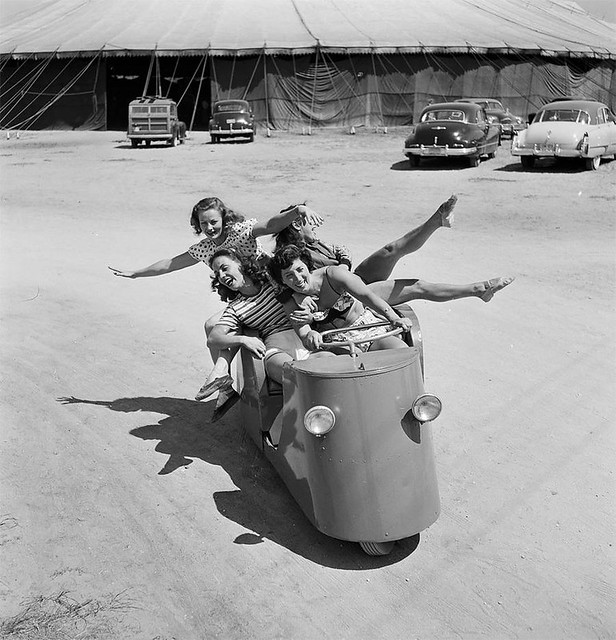
And the second is the one made by The Motorette Corporation of Buffalo, New York from 1946 to 1948.

Circus Motorette
Photo by Nina Leen for LIFE magazine, 1949

Monday, January 15, 2024

The Jagged Edge

[Originally posted at On The Nightstand on Tuesday, October 11, 2016 and titled Trailer Tuesday 10/11/16]

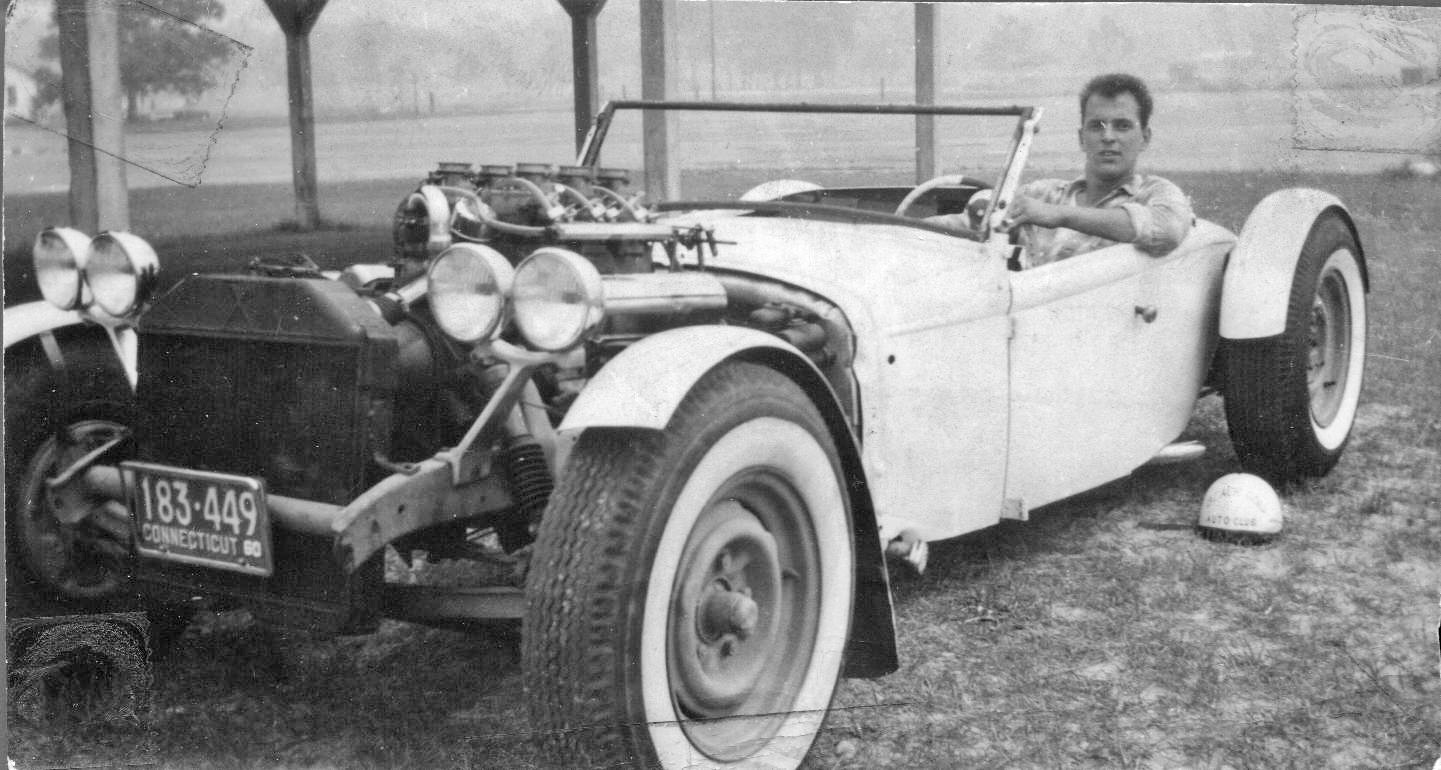
The late Joseph 'Bogie' Beaudoin's channeled 1930 Ford Roadster powered by a caddy engine. Nicknamed "The Jagged Edge" it, for some reason, had a cigarette lighter mounted to the underside of the chassis.

bogieundertrailer
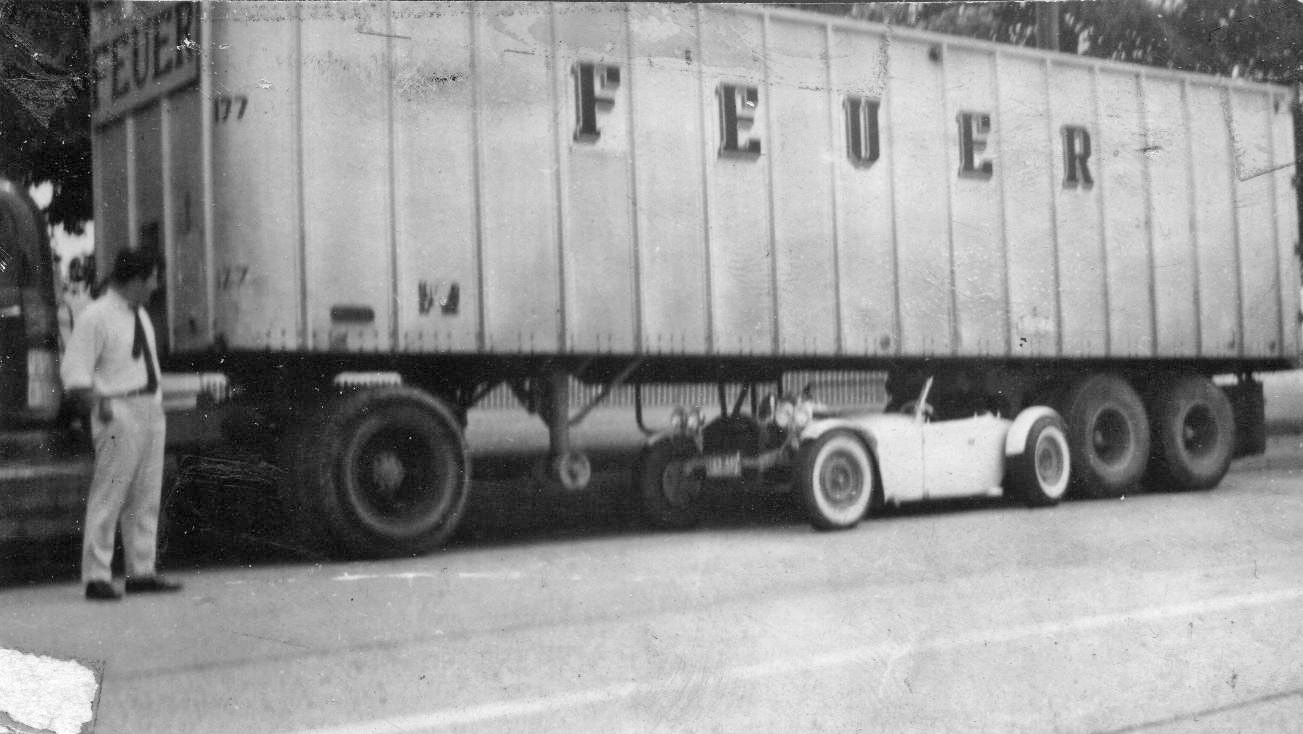
Joseph Beaudoin tucks "The Jagged Edge"—his 1930 Ford Roadster—under a Feuer Transportation semi-trailer.

Beaudoin was an original member of the Black Road Auto Club out of Stamford, Connecticut. This photo was taken in 1960 when he was 20 or 21 years old (born in 1939), three years after the club was formed. The location is across the street from the local favorite Tony’s Diner on Shippan Aveue in Stamford Connecticut.

Joseph-beaudoin-1930-ford

Black Road
Black Road Auto Club plaque.

Joseph-beaudoin-1931-ford-2

Photos from JALOPYJOURNAL and KUSTOMRAMA

1935 Ariel Red Hunter RH500

[Originally posted at On The Nightstand on Monday, October 10, 2016 and titled Motorcycle Monday 10/10/16]

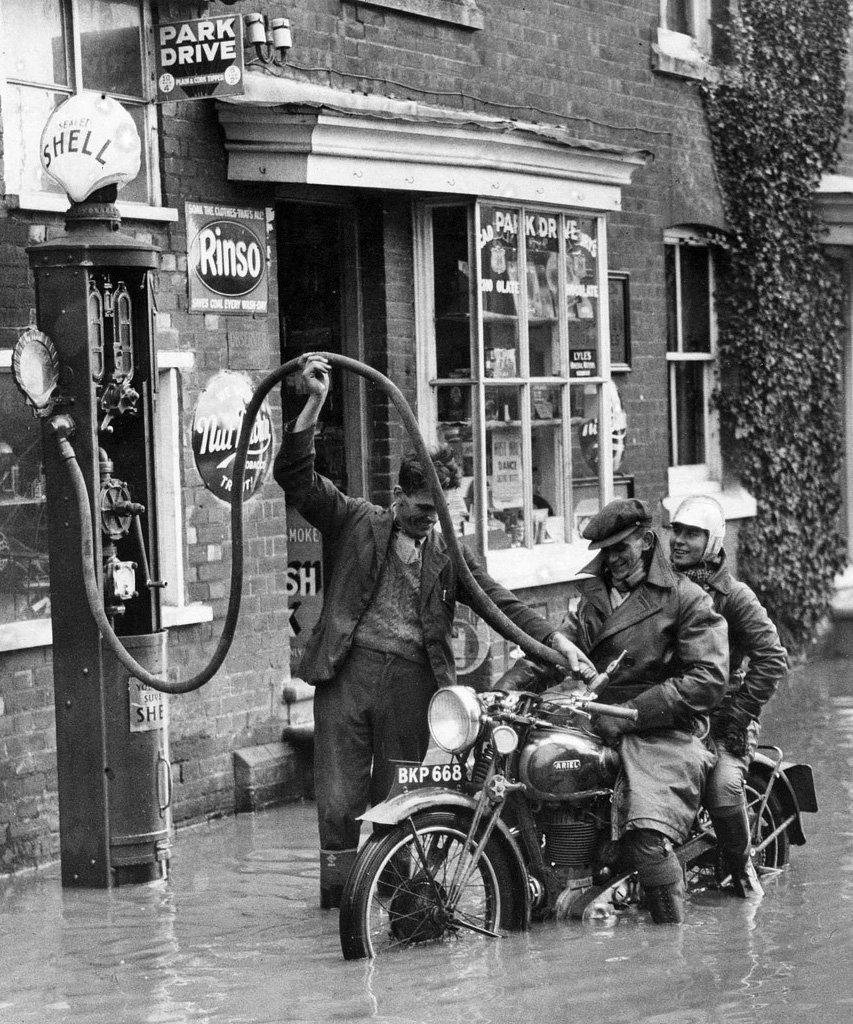
Built pre-August 1935.    Photo taken November 18, 1935.
Shell%2C+England%2C+1935
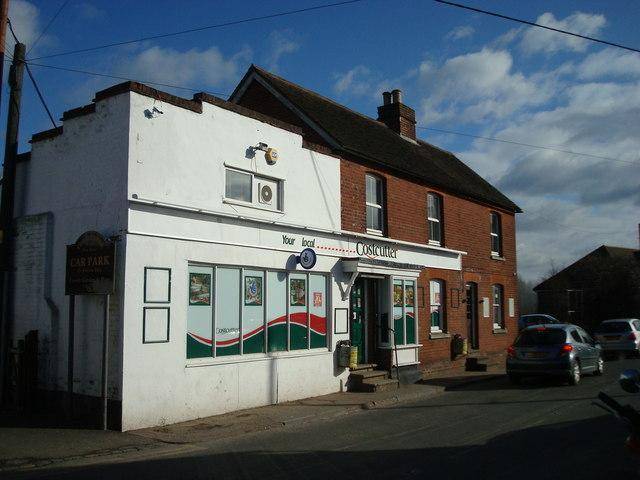
Nestled in the beautiful countryside of Kent, the small village of Yalding is prone to regular flooding as it sits between three rivers – the Beult, the Teise, and the Medway.  On November 18, 1935 this nearly new Ariel RH500 was photographed filling up at the Shell pump during the flood.

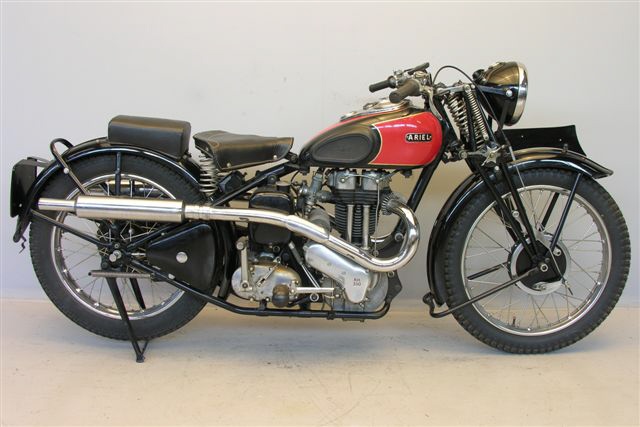
Ariel_350_cc_Red_Hunter_1938
A surviving example.

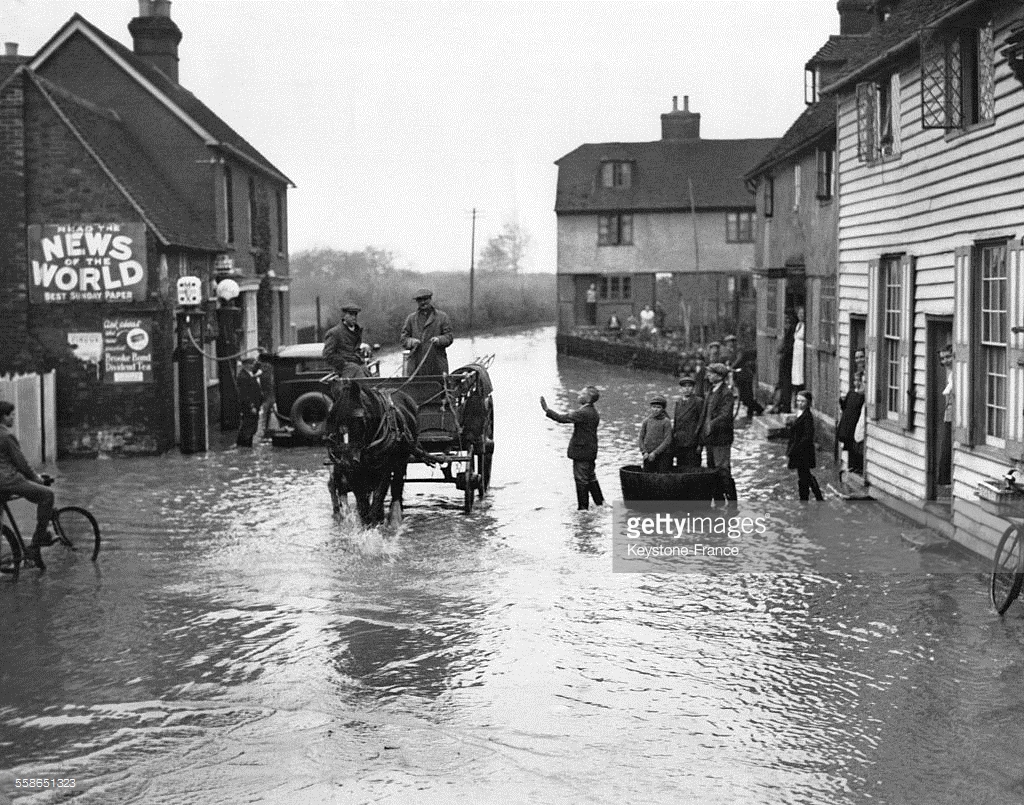
habitants-de-la-ville-dans-la-rue-principale-compltement-inonde-le-picture-id558651323
Later that same day a different photographer captured a shot of a car filling up at the non-Shell pump.

file
The store (minus petrol pumps) as it appeared in 2016.

Friday, January 12, 2024

CHP Sedan Delivery

[Originally posted at On The Nightstand on Saturday, October 6, 2016 and titled Sedan Delivery Saturday 10/08/16]

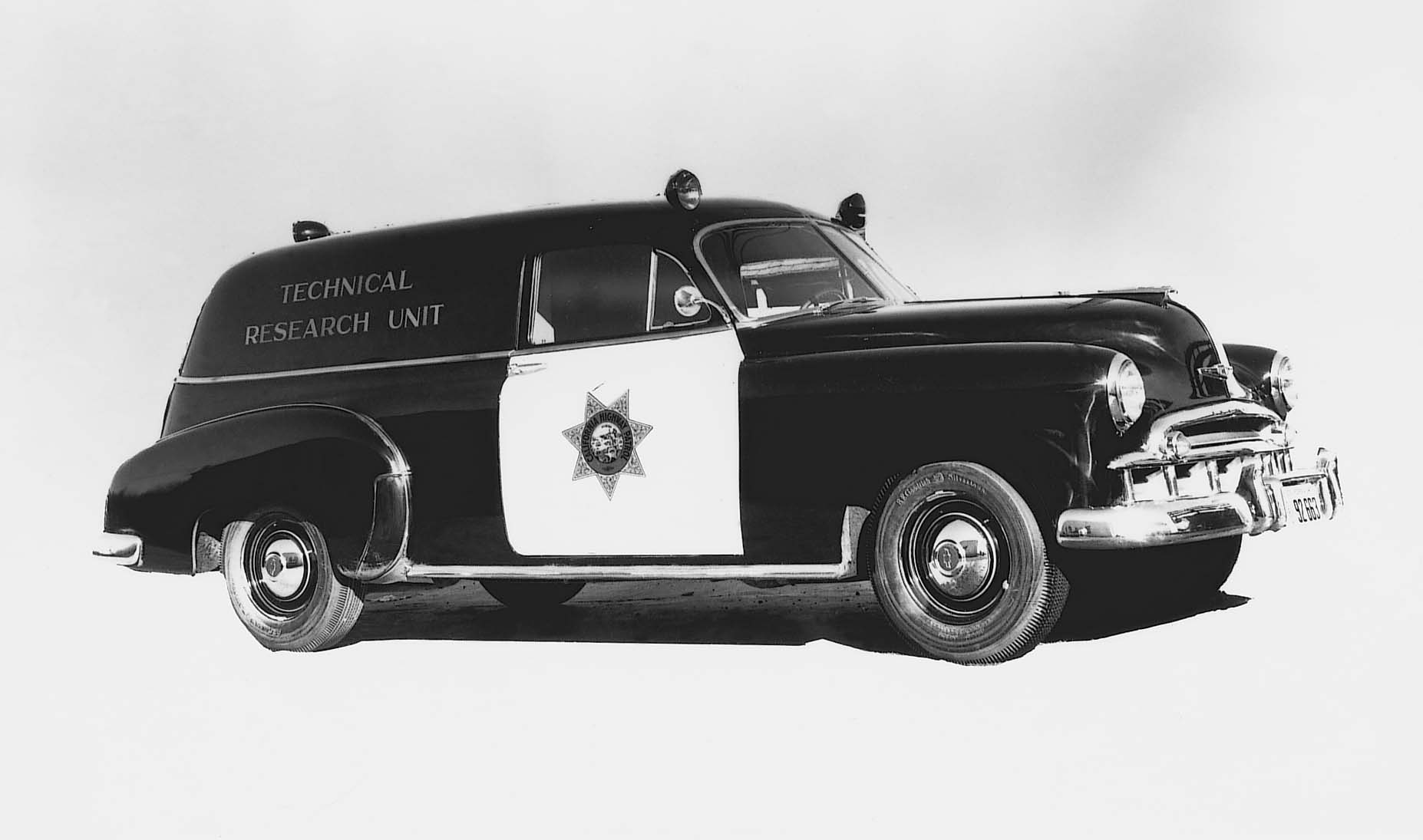
The California Highway Patrol's Technical Research Unit's 1949 Chevrolet Styleline Series 1500 GJ Sedan Delivery.  9,310 Model Number 1508s were produced, and the CHP got at least one of them.

49sedandel
Bakersfield
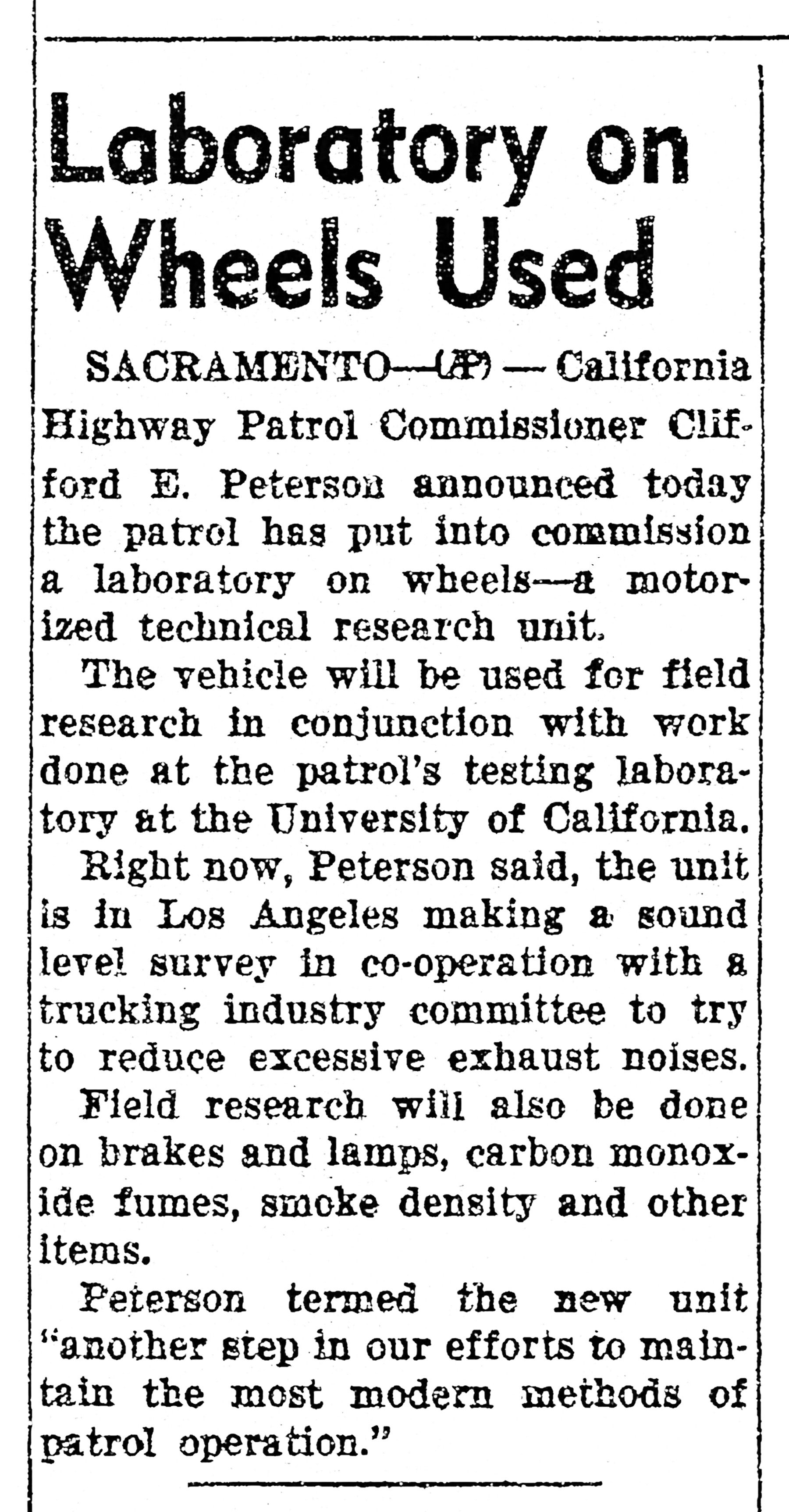
Top photo from Old Cars Weekly, clipping from the Tuesday, January 17, 1950 edition of The Bakersfield Californian.

Thursday, January 11, 2024

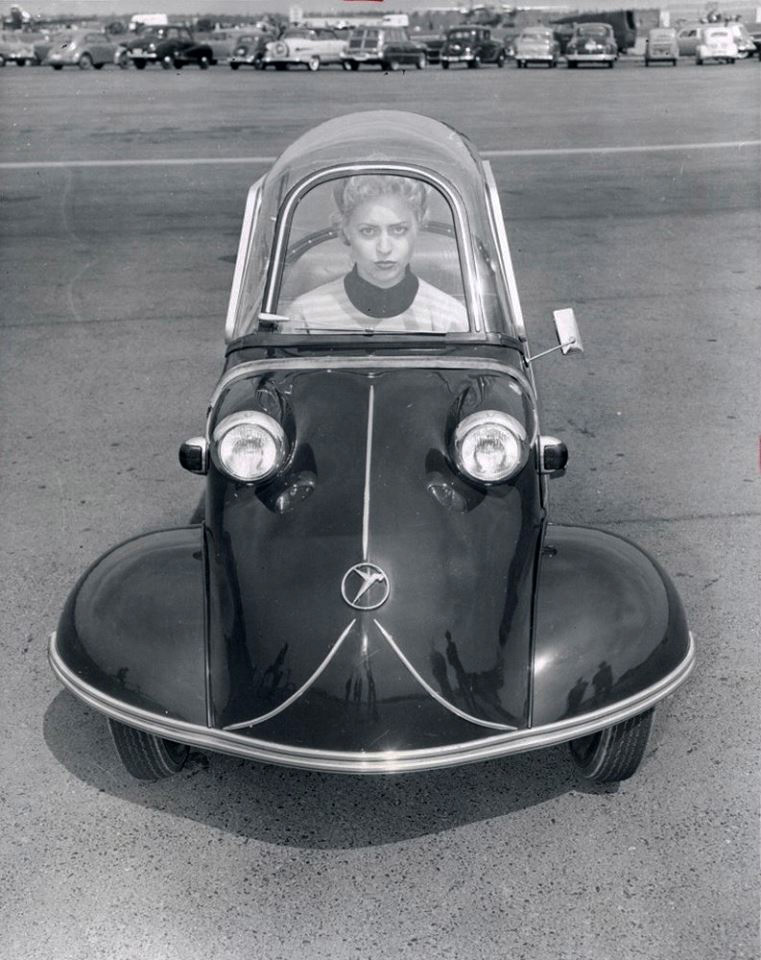
Messerschmitt Kabinenroller (Cabin Scooter)

[Originally posted at On The Nightstand on Friday, October 7, 2016]

In memory of Rhoda Emma Kruse.

tumblr_o6x6hdkfhF1sswdljo1_1280
Rhoda not pictured. Photo from Hemmings.

Rhoda was a wonderful person, and the only one I'd ever met who had purchased a Messerschmitt Cabin Scooter new to use as a daily driver. She was afraid to drive, but figured she "could handle a car that small."

0010707603-01-1.jpg_20130118

Her obituary (below) was published in the January 19, 2013 edition of The San Diego Union-Tribune.
KRUSE, RHODA EMMA Aug. 8, 1929 to Nov. 19, 2012 Rhoda was born in Brooklyn, NY and attended Bethany College, Pratt Institute, and Columbia University. She was a ferocious reader from an early age and became a senior librarian with the City of San Diego and Carlsbad, as well as the San Diego County Office of Education. Her worldly travels added to her expertise and deep respect for other's cultures. From her early years and upbringing, her faith was always very important to her. In San Diego, she became involved with two different Christian churches, University Christian Church and Pacific Beach Christian Church. Her faith was strong despite her having to fight Alzheimer's. She will be greatly missed by her church families. She is survived by her sister Harriet Botta, of Toronto, Ontario Canada, along with several nieces and nephews. A celebration of her life will be held at the University Christian Church, 3900 Cleveland Avenue, 2:00 p.m. on Sunday, January 27. In lieu of flowers, donations can be given to any local library branch in her memory.
I was lucky indeed to have known her.

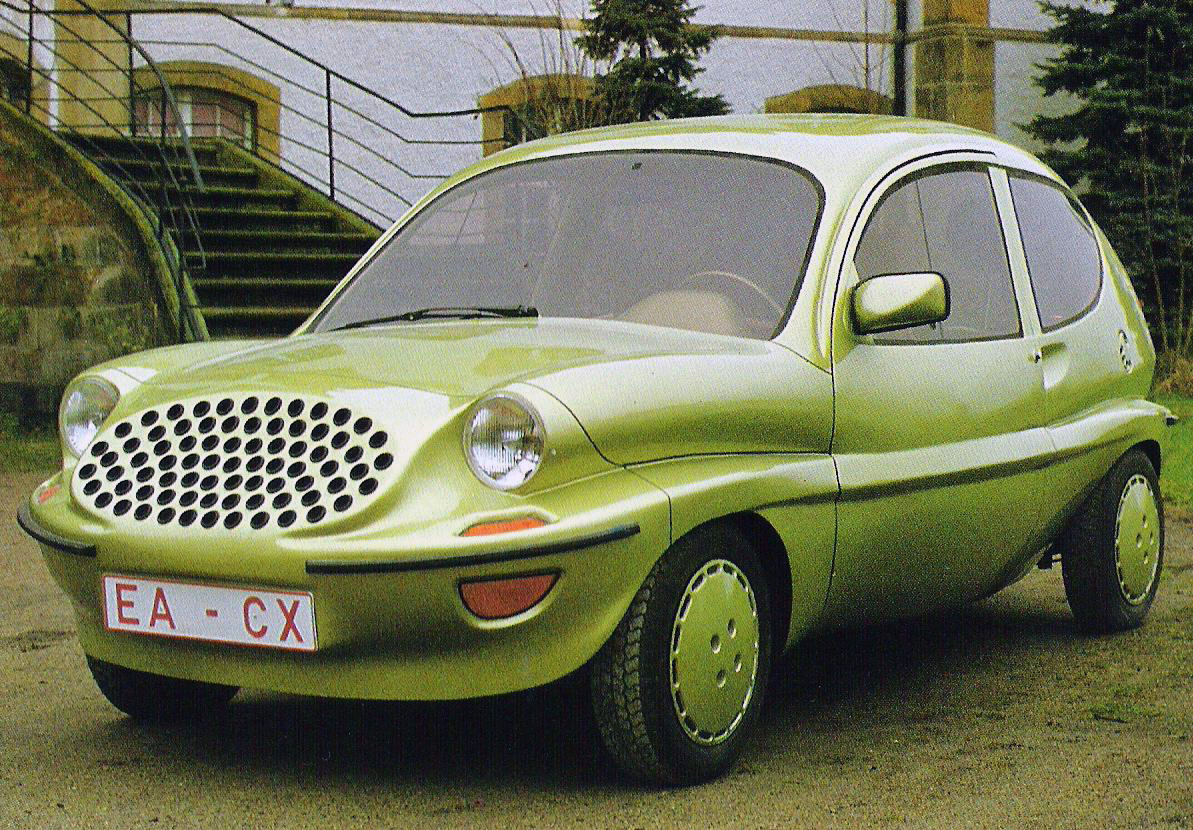
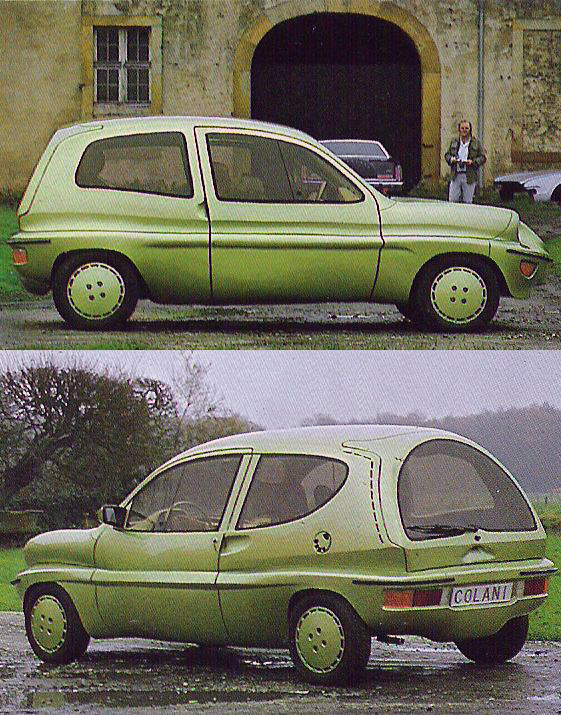
Candidate For Ugliest Concept Car Known to Man

[Originally posted at On The Nightstand on Friday, October 7, 2016]

BZROi
1977_Colani_VW_Prototype_03
More beauties here.

1977 Volkswagen Prototype concept by Luigi Colani.  Developed as a successor to the Beetle, positioned between Polo and Golf.  Other Colani automotive designs can be found here.

Foreign Flivver

[Originally posted at On The Nightstand on Friday, October 7, 2016 and titled Friday Flivver 10/07/16]

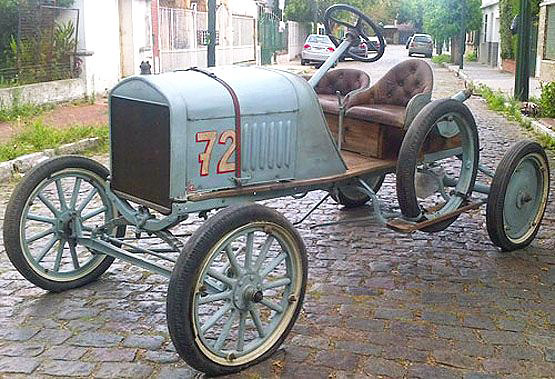
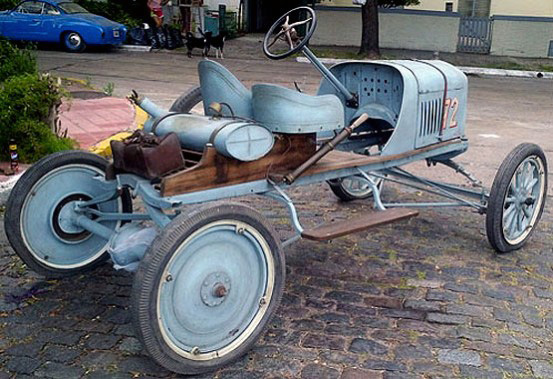
Argentine Ford Model-T Baquet (Speedster)

986d5a80ff9d7aa1f3d6d542a13eee7e
53023-ford-t-1925-b-553x379
Originally offered for sale here.

I have a soft spot for Model-T Speedsters. This one first appeared in early 2013 and these images can still be found around the internet today, mainly on Pinterest. The vehicle had a new differential, new woodwork, sheet metal and new paint, new leather upholstery, new front wheel spokes, new radiator, and a new air pump and bronze French pressure gauge for naphtha fuel tank. The engine had new bushings and front bearing but needed rings and assembly. It was missing the gearbox.

It could have been yours for 81,000 Argentine pesos, 5,400 American dollars, or 4,914 Euros in 2013 money.

Wednesday, January 10, 2024

New New Orleans Three-Wheelers

[Originally posted at On The Nightstand on Thursday, October 6, 2016 and titled Thursday Three-Wheeler 10/06/16]

New+Orleans+during+the+1950s+%283%29
From Vintage Everyday.

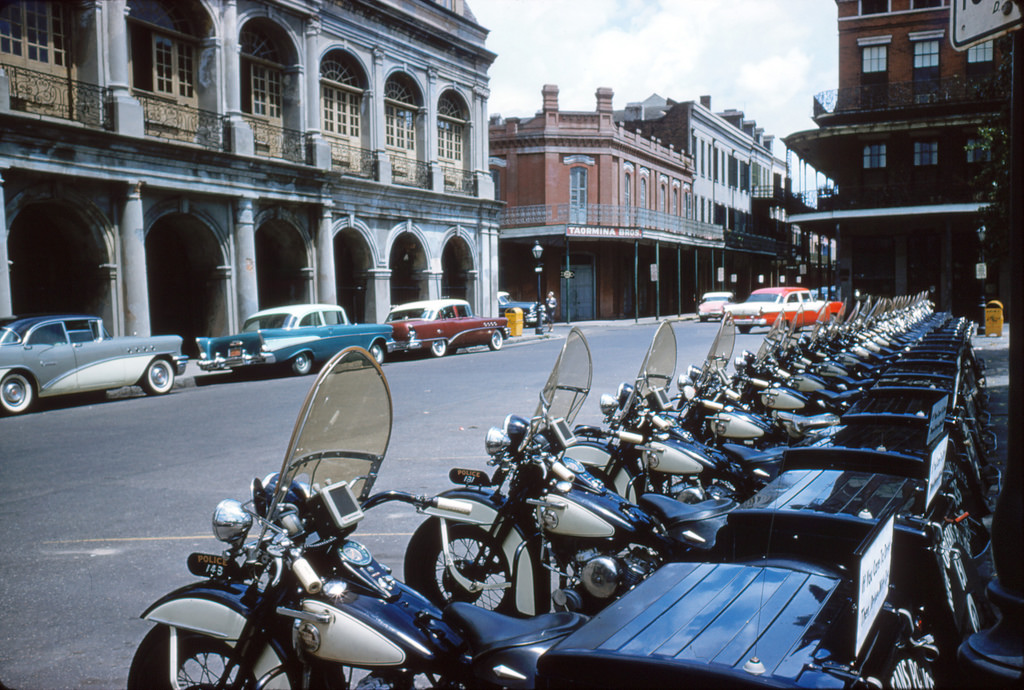
20+ brand new 1957 Harley-Davidson Model G Servi-Car Police Special 3-wheelers are displayed in New Orleans. They were equipped with a 45 cubic inch (737 cc) twin-V flathead engine and a three-speed transmission that also included neutral and reverse.

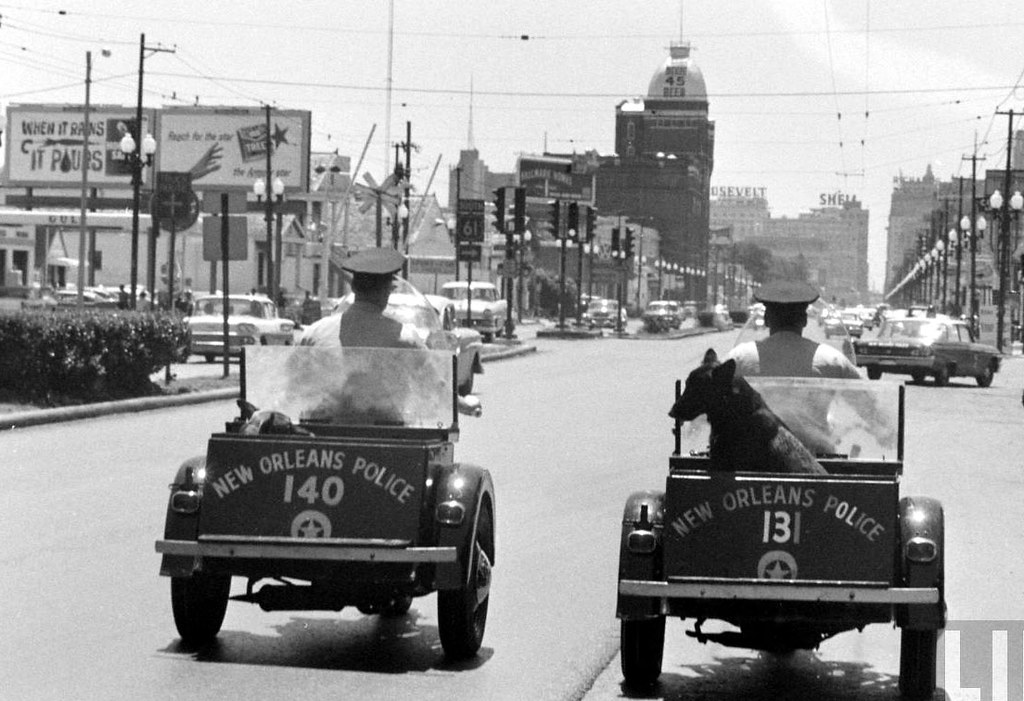
Four years later finds at least two of them converted into canine carriers—including the second from the left (above), #131—by removing the cargo box lid and installing doggy windshields.
tumblr_lfxxunXQ9s1qzuuyxo1_1280
From this 2011 post.

Seven Joes and a Duck

[Originally posted at On The Nightstand on Thursday, October 6, 2016]

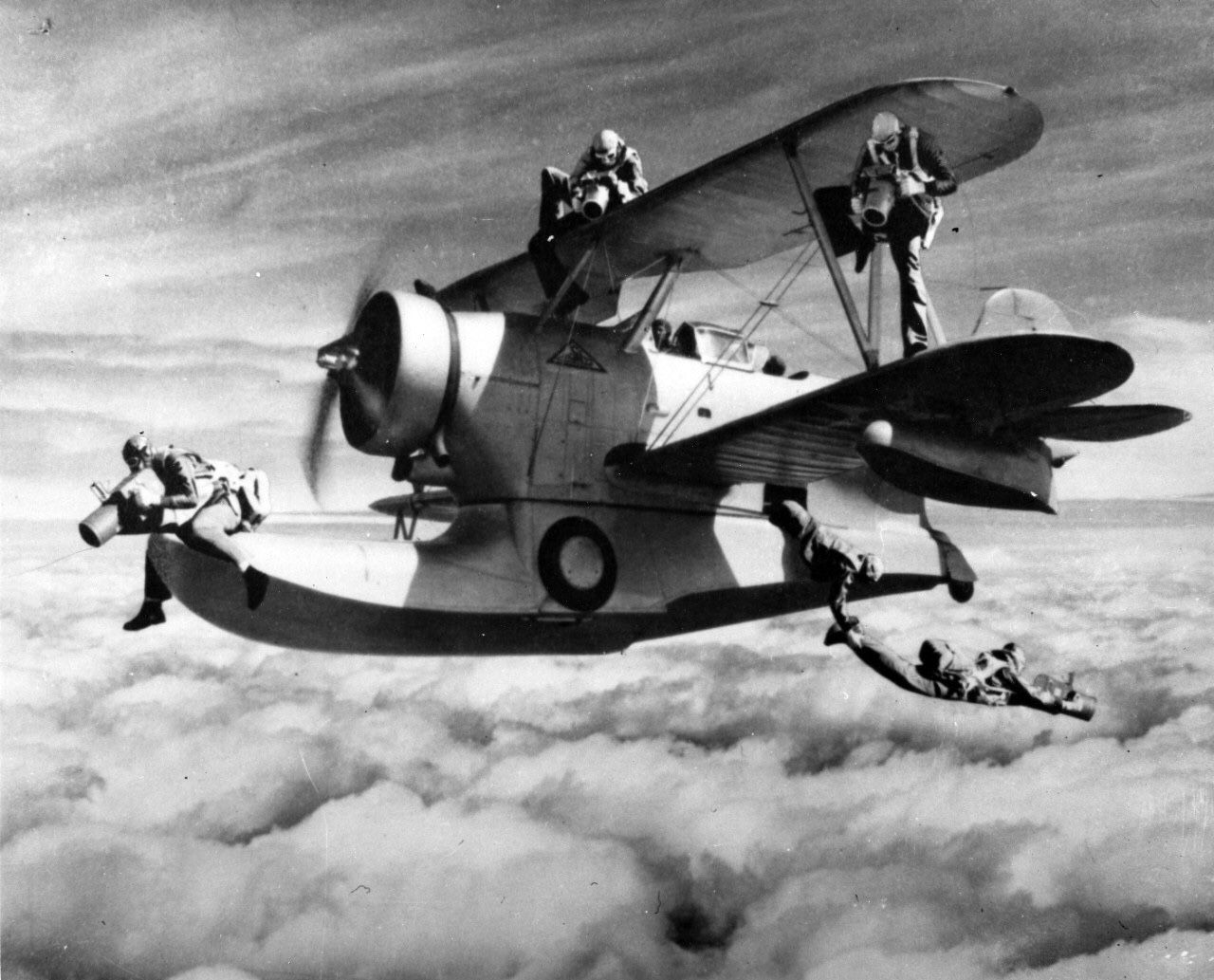
Photo montage by the well-known photographer ‘anonymous’, PH2/c, used in the squadron’s Christmas card, 17 February 1942. It features some of VJ-7’s enterprising photographers working to get the best possible camera angles from positions aboard a Grumman J2F “Duck.”

tumblr_oeknorMdCz1r39szco1_1280
From Gegaan Maar Niet Vergeten (Gone But Not Forgotten).

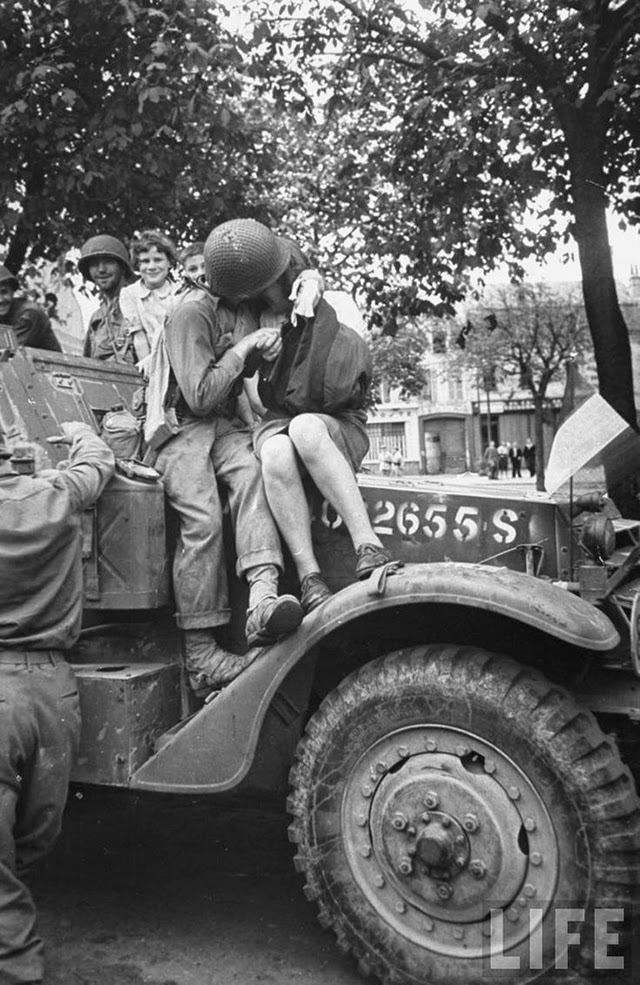
The "S" is for Suppressed

[Originally posted at On The Nightstand on Thursday, October 6, 2016]

That is, the half-track is suppressed, according to the serial number painted on the hood. Obviously not the American soldier or the French girl.

Suppressed
Original caption: "American soldier kissing a French girl as they embrace on the hood of a half-track, 1944. (Photo by Ralph Morse)"   From Life magazine via Vintage Everyday.

More on radio noise suppression at Shorpy.

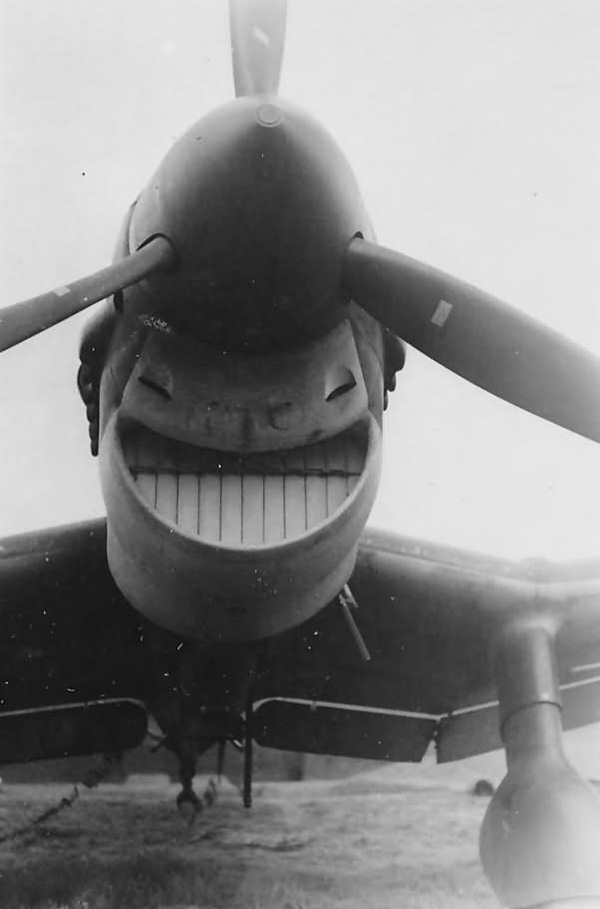
Cheeky Little Blighter

[Originally posted at On The Nightstand on Thursday, October 6, 2016]

Front view of a Junkers Ju 87B.


Ju87
From World War Photos

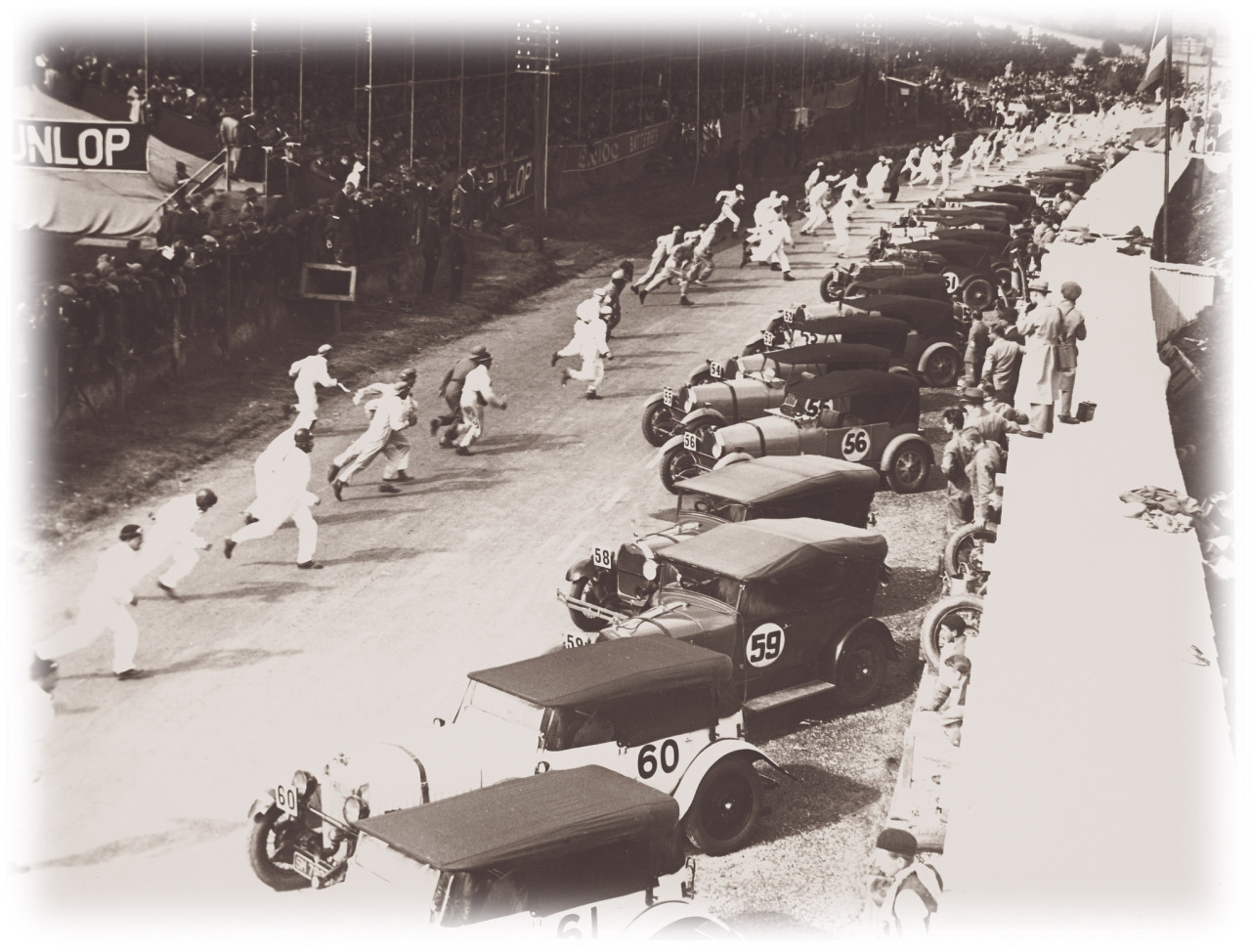
1929 RAC Tourist Trophy Race

[Originally posted at On The Nightstand on Wednesday, October 5, 2016]

A Le Mans-style start at the 1929 RAC Tourist Trophy on the Ards Circuit in Northern Ireland.

1929 RAC TT

Photo from the Public Record Office of Northern Ireland's flicker page.
Read about the pre-event planning in Motor Sport Magazine's incredible online archive. Download a pdf copy of official program with rules here from the Front-Wheel-Drive Alvis website Hell's Confetti.

Tuesday, January 09, 2024

I'm back. Yet again.

I'll be doing some house cleaning for a bit as I fix or remove links that have broken since I was here last, then I need to remove the errant transportation posts from On The Nightstand and repost them here.

I'm also removing the nontransportation posts from On The Nightstand and moving them to Not The Sharpest Crayon In The Blogs as On The Nightstand will henceforth will be dedicated solely to books (although any transportation books I read will be mentioned on this site as well).

Then I will be posting new stuff here (hopefully regularly) and on the other two sites (hopefully occasionally).

And I need to get this done before I have pizza with Jesse on Friday.

Monday, September 09, 2019

Dang, Jesse

You had one job. And you did it magnifiquement bien.
SandE

I sent justacarguy this one photo, and he turned it into THIS! Bravo!

Saturday, February 18, 2017

Fun With Scooters Part 1:
The Powell Streamliner

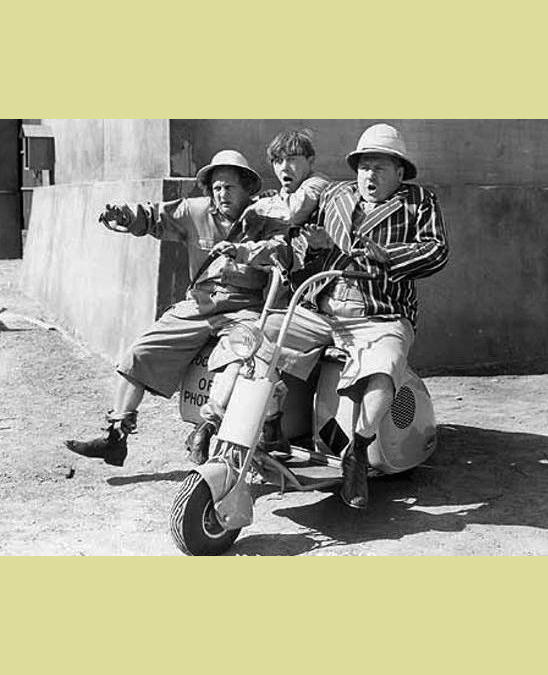
three-guys-on-a-vespa.preview

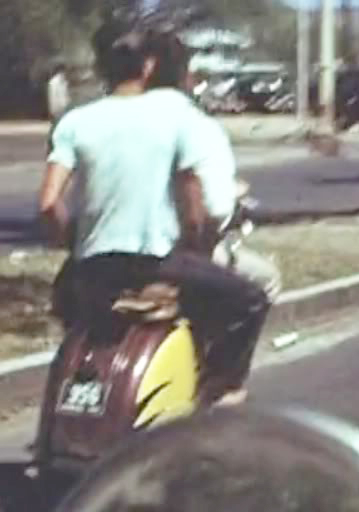
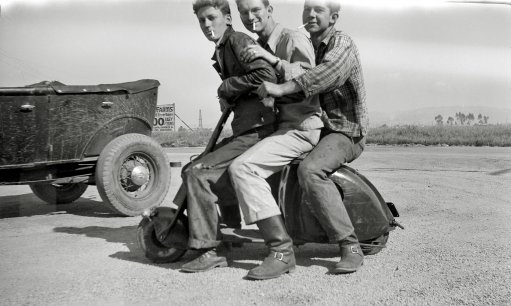
Last February Vintagetvs posted the above photo over on Shorpy with his original title "The Wild Ones" and captioned "Not even Brando could make that scooter look cool. From the negatives I found at a Whittier book store." The photo itself was named "three-guys-on-a-vespa.jpg"

In mid-December Rivet Head posted a copy with no caption that—as of this date—was reposted on 11 other sites, including my favorite Belgian photo blog Jalapeno in the eye (occasionally NSFW).

It next appeared on the track east, with a link back to the original Shorpy post, but also with a different caption. The new caption, which has been copied to an additional 23 or so sites, says "Young men on a homemade scooter." Well, young they may be, but homemade it is not, nor (with apologies to Vintagetvs) is it a Vespa.

The scooter is an early 1939 Powell P-39 Streamliner as made by the Powell Manufacturing Company in Compton, California.
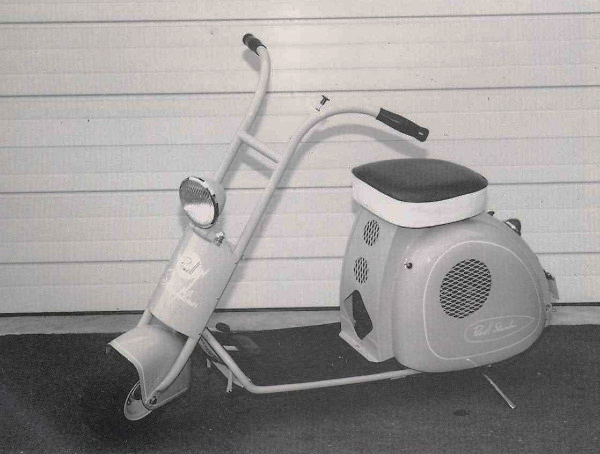
1939 Powell
Powell P-39 Streamliner

Hayward and Channing Powell graduated from Manual Arts High School in Los Angeles in 1924 and immediately started manufacturing radios. In 1926 they formed Powell Manufacturing. Around 1938 they started manufacturing motor scooters, and by 1941 were producing small motorcycles. During World War II the factory switched to war work, and when the war ended they resumed scooter resumed production. Starting in late 1954 and continuing through early 1957, Powell manufactured pickup trucks and station wagons.
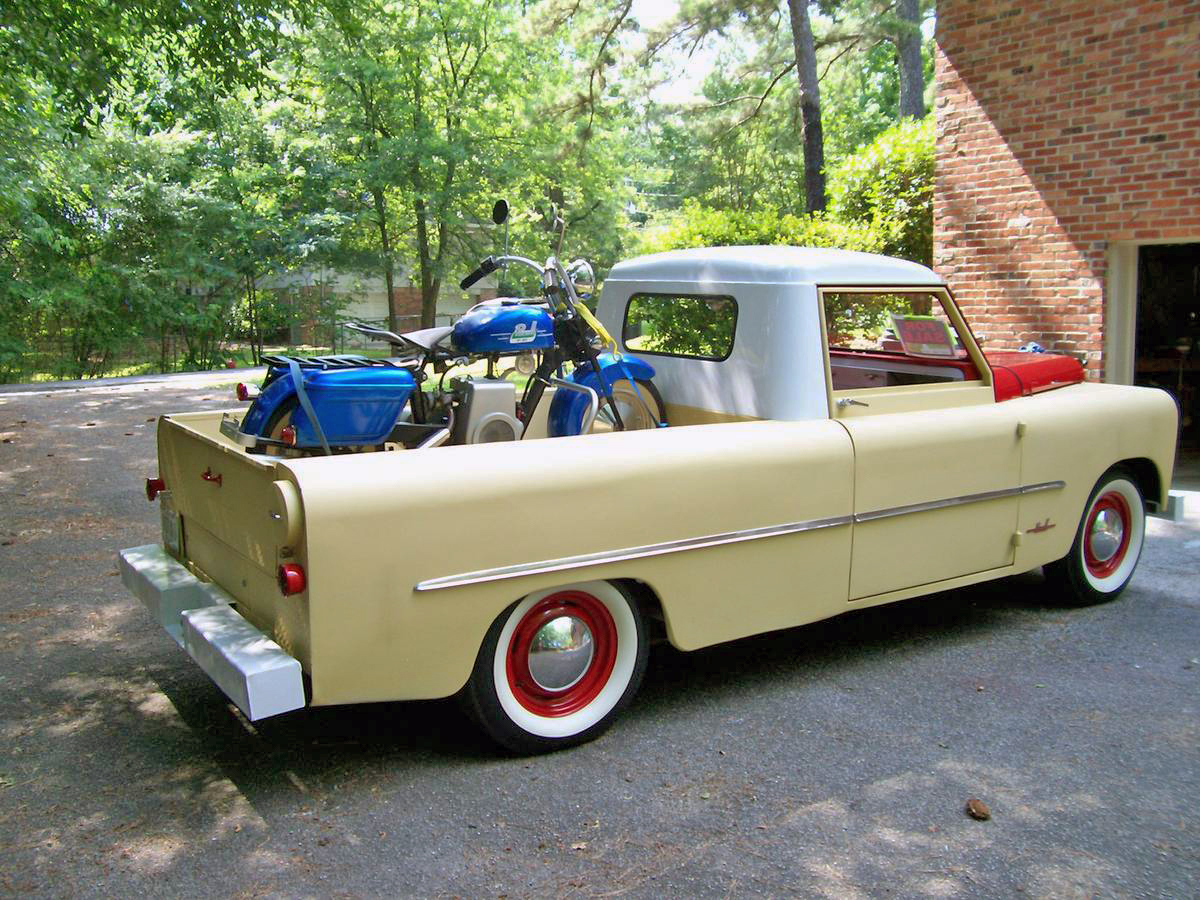
1956 Powell
1956 Powell pick-up (with an incorrectly painted hood) carrying a 1954 Powell P-81 scooter

In the 1960s they began building trail bikes, changed the name to Powell Brothers, Inc., and moved the company to South Gate, California. They ceased production in April 1979.

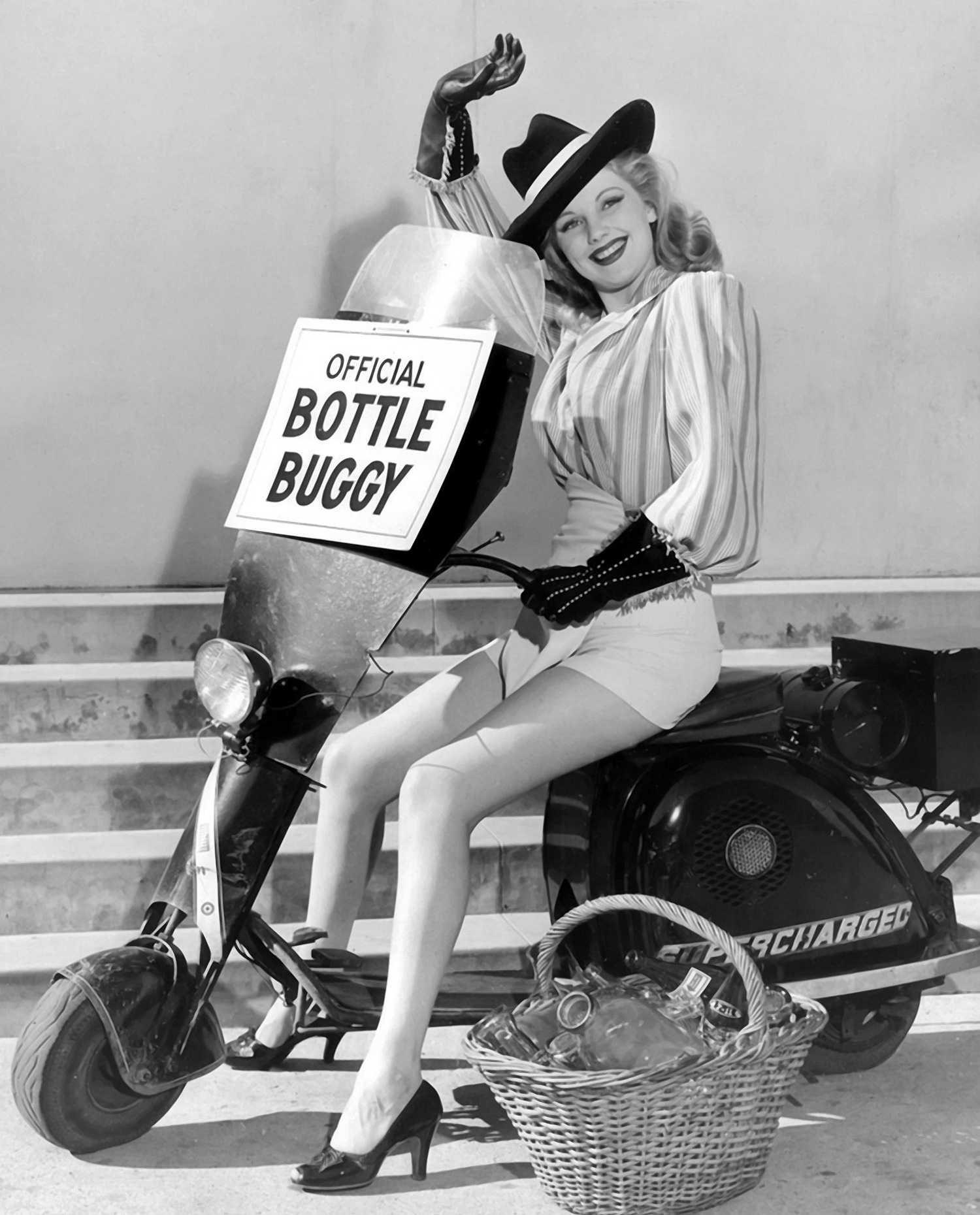
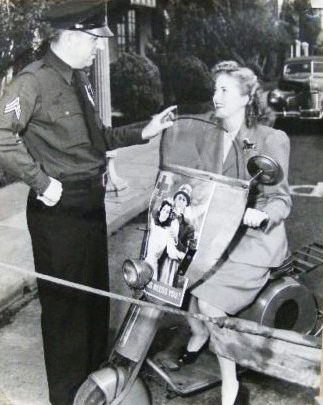
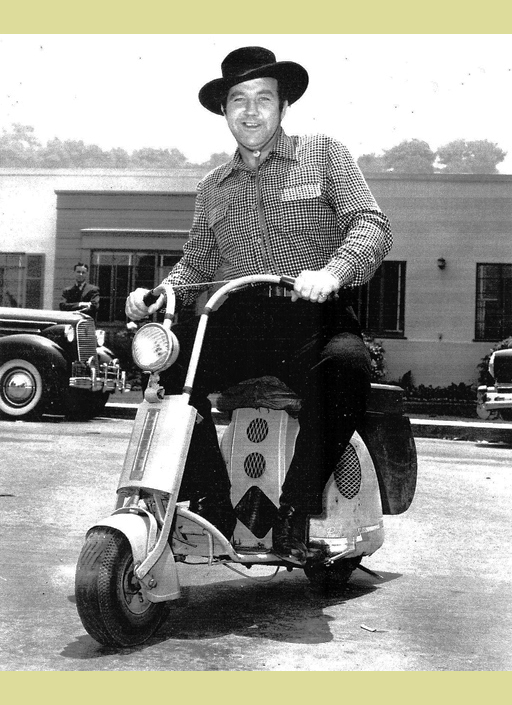
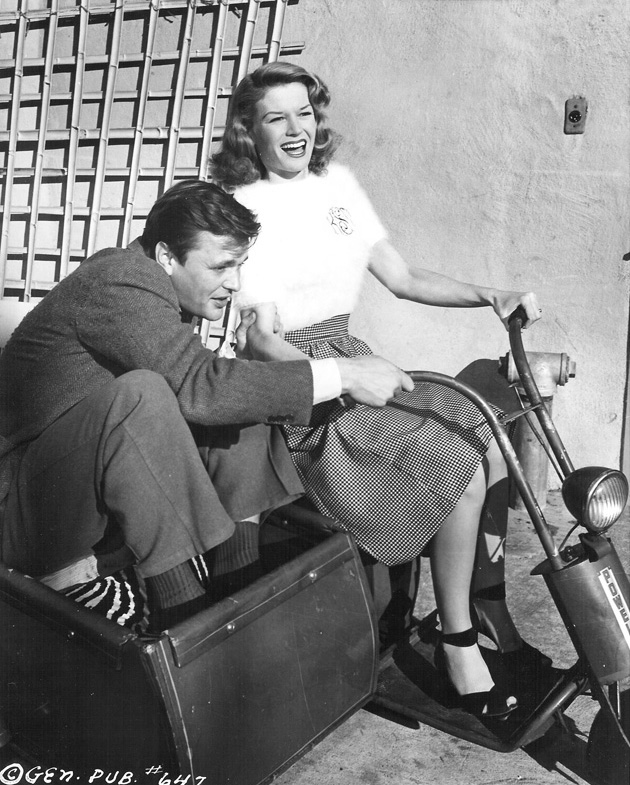
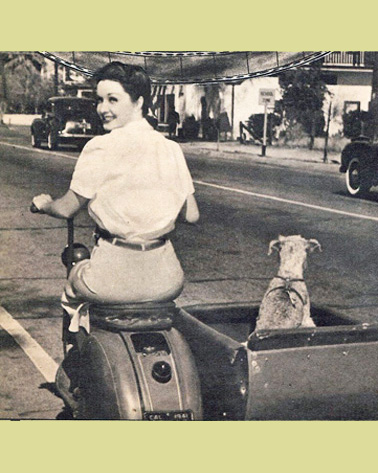
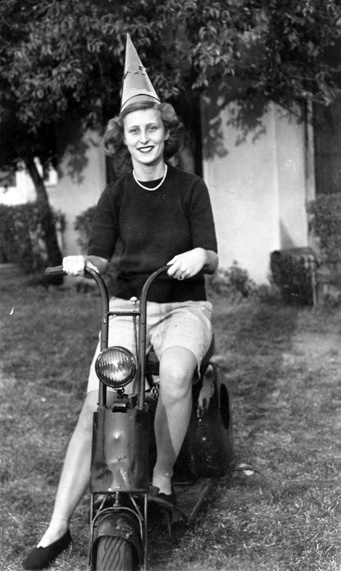
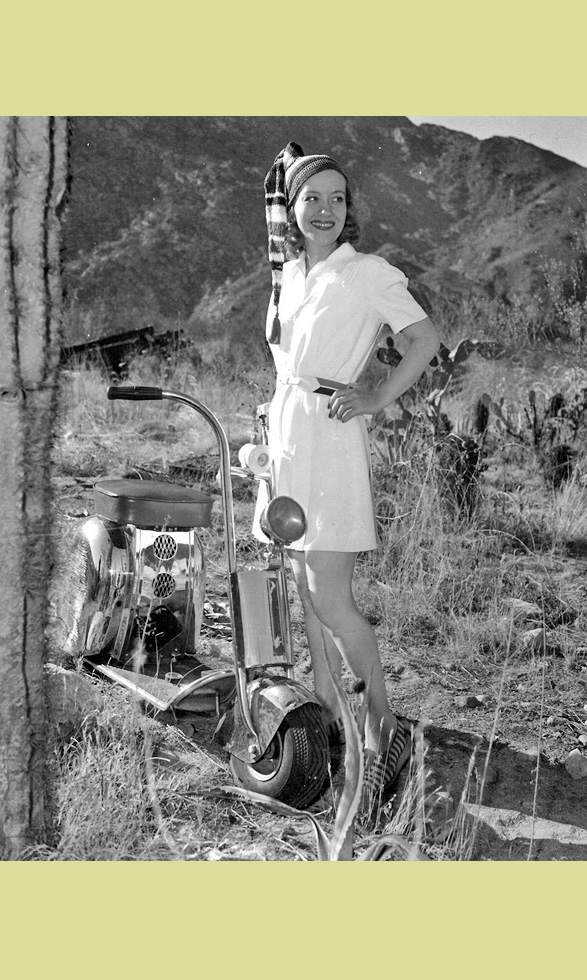
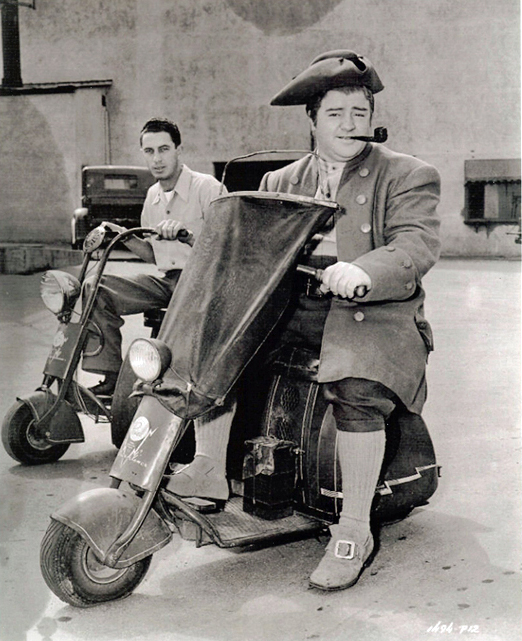
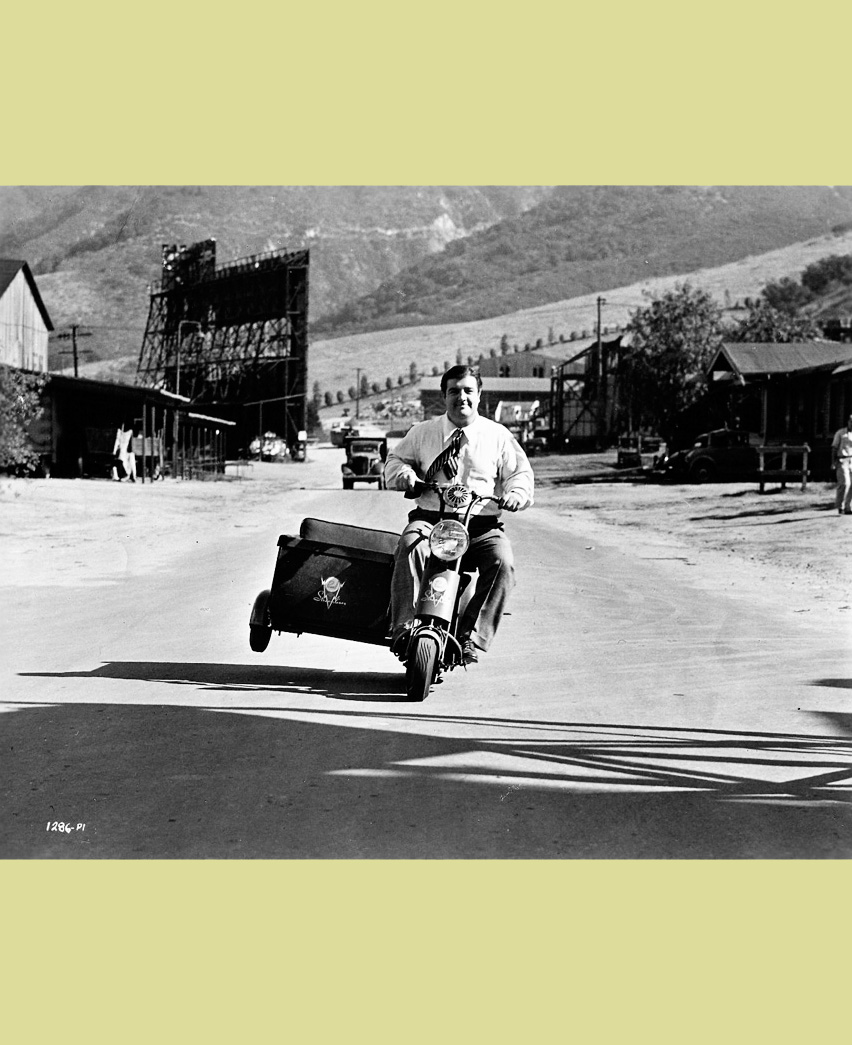
Maybe Brando couldn't make that particular scooter look cool, but a number of Hollywood stars (and wannabe stars) were photographed on Powell P-39s, P-40s, and P-41s.
LC1LC2aDM
Lou Costello       Lou with sidecar       Dolores Moran
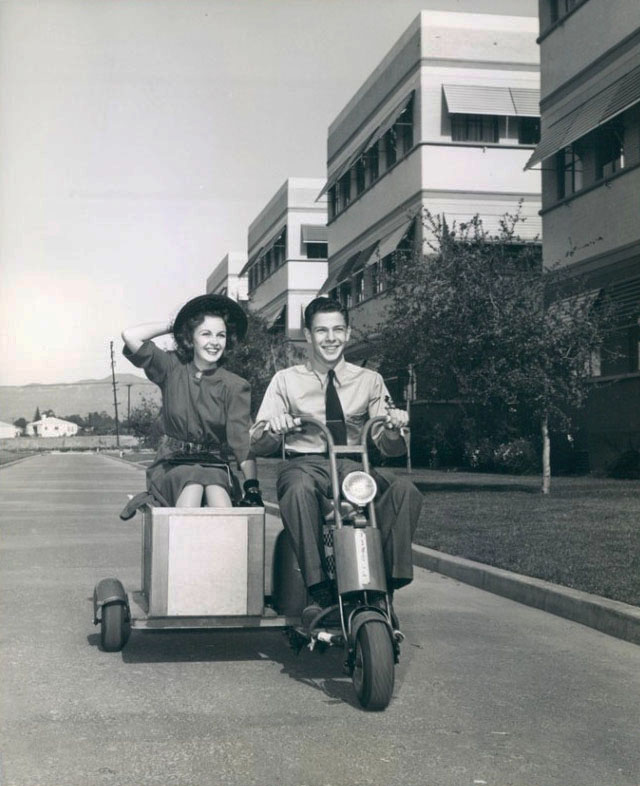
FGTTSSW
 Frances Gifford in the sidecar   The Three Stoogies*     Sally Wadsworth
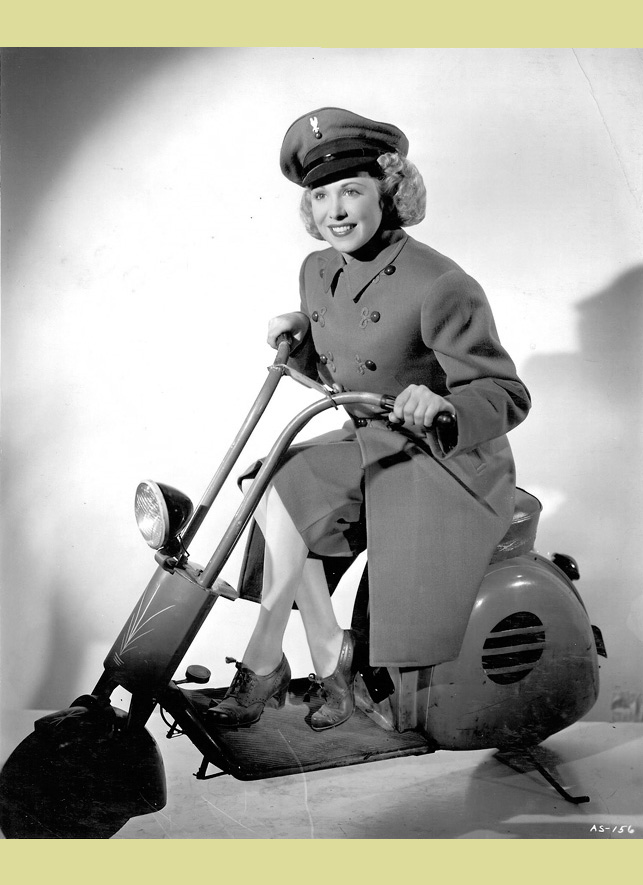
CDJOBBC
    Claudia Drake        Joe E. Brown       Broderick Crawford
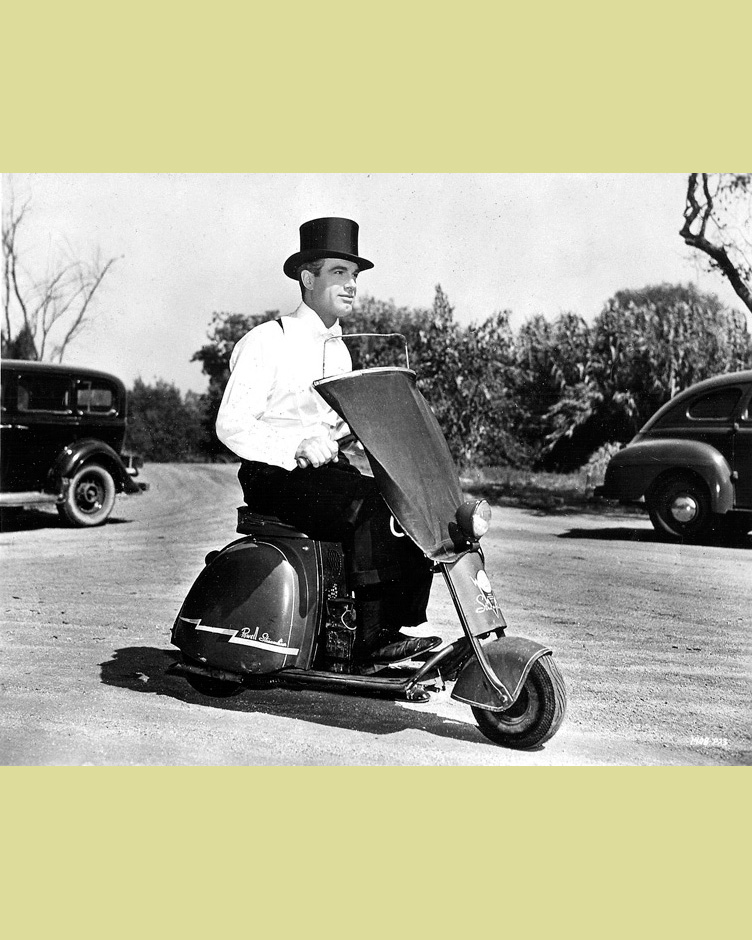
CKKTS & PVEGP
    Charles Korvin        K. T. Stevens         Gail Patrick
  (on Lou Costello's scooter)     & Peter Van Eyck


And three unknowns just because:

UK (1)PHSC
  Claimed to be a U.K scooter     Party Hat         Shiny Chrome
  girl, but no source cited


*Often mistaken for a Crocker Scootabout, but no. That diamond shaped cutout on the front of the motor housing is a Powell thing, not a Crocker thing.

As far as I can tell, the single Powell Streamliner that has been seen by the most people anywhere is this one:
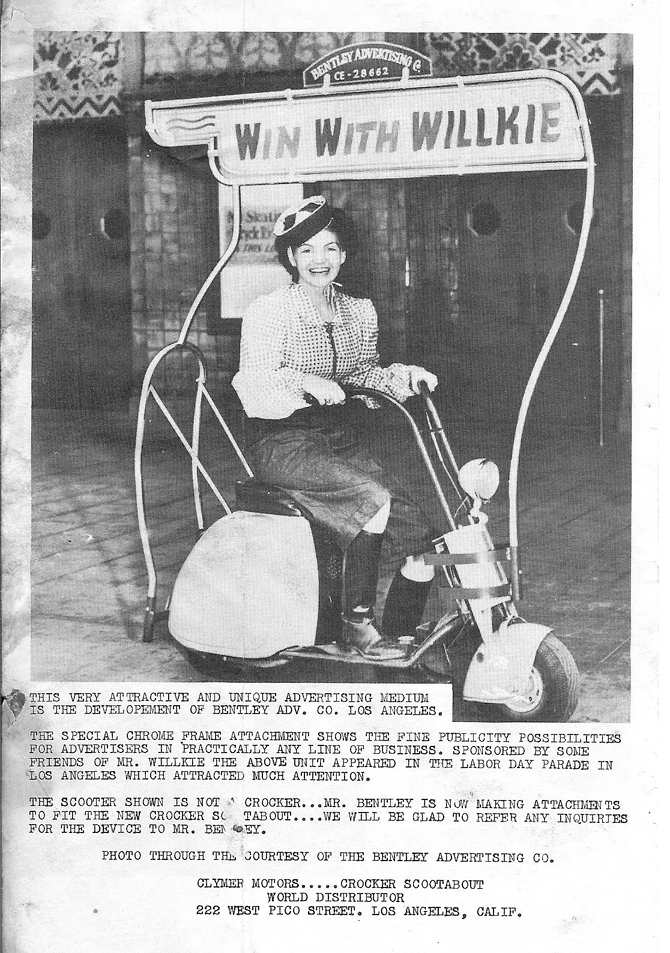
Ad

As the ad copy states, this P-40 participated in the September 2, 1940 Labor Day parade in Los Angeles, appearing before some 400,000 spectators—which must have been a hoot since the vast majority of the 100,000 strong marchers were Roosevelt supporters. It was the first public display of the scooter-borne ad medium created by the Los Angeles-based Bentley Advertising Company. Clymer Motors, being the "World Distributor" of the Crocker Scootabout, did not seem too apologetic for showing the advertising device attached to a Powell rather than a Crocker. After all, they also represented Powell, as shown by this flyer advertising used Powell P-40s.
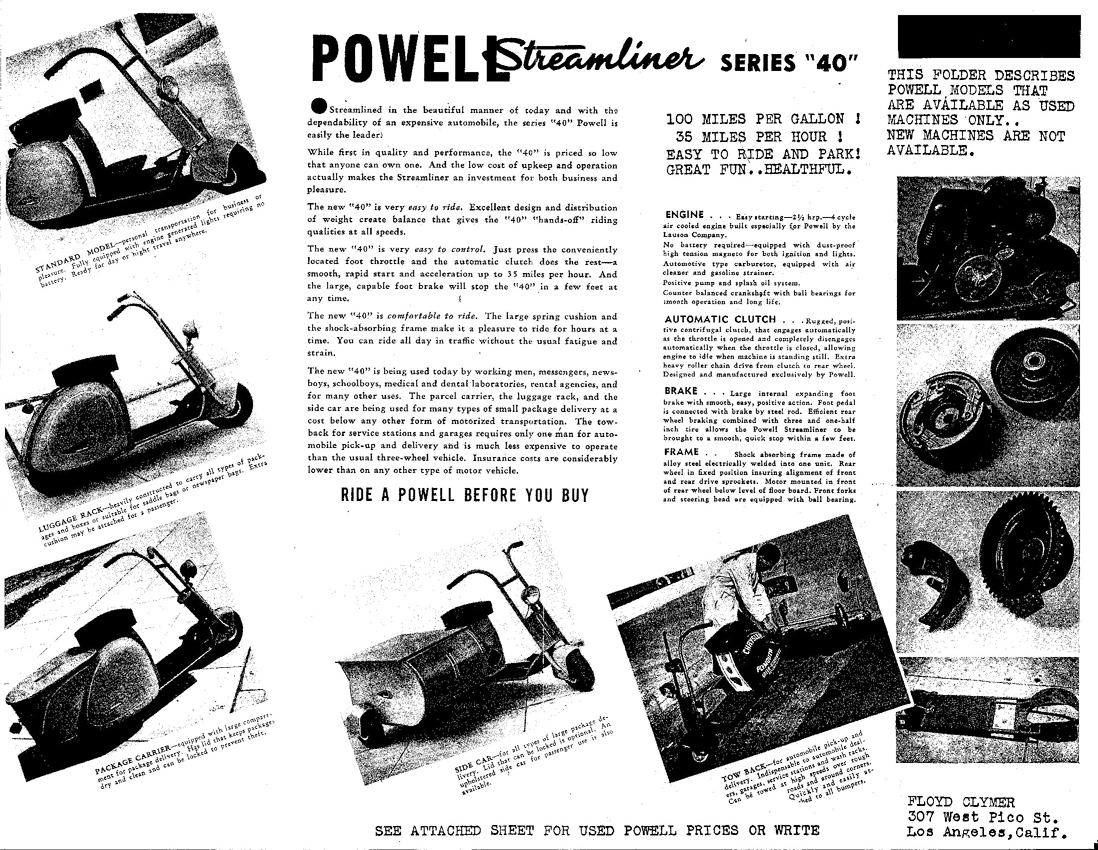
Clymer

This would have been after the Powell factory had switched over to war production, as no new scooters were being produced.

Floyd Clymer was, of course, the famous auto dealer and enthusiast who at the age of 11 had been the world's youngest automobile dealer (REO, Maxwell, and Cadillac) in Berthoud, Colorado in 1907.

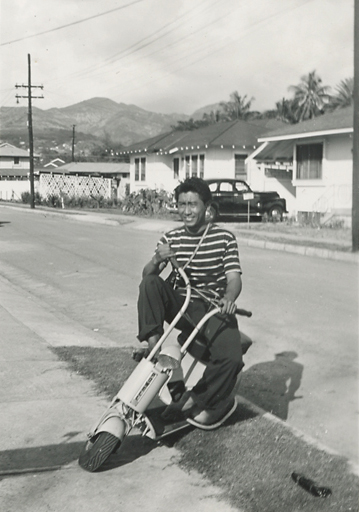
At least two Streamliners made it to Hawaii:
H1H2

The image on the right was taken from a one second appearance in a 16mm film shot on VJ Day in Honolulu. Watch the entire three-and-a-half minute clip here. See if you can spot the Navy gray Divco truck.

This screed isn't intended to be a treatise on all things Powell. Rather, it's just a brief look at the Streamliners of the late 1930s and early 40s. But I would be remiss if I didn't mention that there was a post-WWII afterlife for the Streamliner design. Sort of. Maybe. Or maybe not. Check back for Part 2.

Wednesday, March 11, 2015

Edwin Columbus Juergens

The last post detailed the Juergens Air Propelled Car and the publicity surrounding it. This post studies the life of the inventor—Edwin Columbus Juergens, or simply E. C. Juergens, as the stories of the day named him—and looks at his pre-propeller automotive design experience. To do that, we start with a brief history of his family in America.

Edwin's grandfather, Ludwig Daniel Juergens, emigrated from Prussia in the early 1840s. By 1852 he had married Magdalene Helene Koehn and moved from Milwaukee to Chicago, where they had two children - Theodore and Bertha. Magdalene died in 1859 and sometime later Ludwig married Wilhelmine A. Prosch. Together they had four children - Helene, Alfred, Doris, and Ludwig.

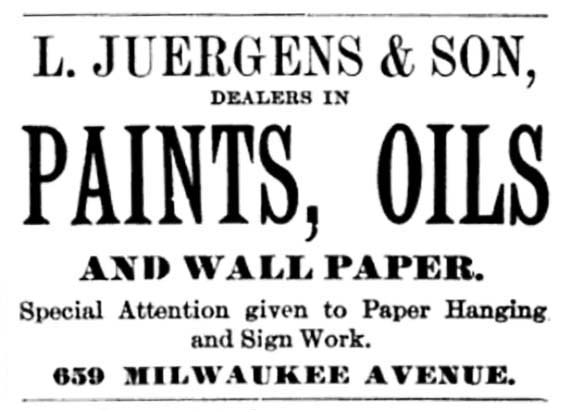
The elder Ludwig entered the Chicago workforce as a general painter, and used that experience to get hired in 1864 as paint shop foreman for the Chicago and Northwestern Railroad. His son Theodore had won a scholarship to Porter's Telegraph College after high school, and Ludwig used his influence to land Theodore a job with the Chicago and Northwestern in 1869 as a telegraph operator. Influential or not, Ludwig lost his job in the aftermath of the 1871 Great Chicago Fire and had to survive as a sign painter. His expertise with paints would eventually cause him to team up with Theodore (who had also worked as a sign painter and a decorator) in 1875 to start a large paint manufacturing business on Milwaukee Avenue in Chicago - L. Juergens & Son, Paints.

and Son
Advertisement from page 609 of the 1886-7 edition of A. N. Marquis & Co.'s
Handy Business Directory of Chicago

They soon expanded into oils and wallpaper, and more. Theodore's sister Bertha married Adolph Kruger the following year and by 1880 he was a partner in the business. Of Theodore's half-siblings not much is known except for Albert, who became an artist of some renown, but only after his father had died. Ludwig disapproved of that line of work—although in 1881 he allowed Alfred to attend the Chicago Academy of Design as long as he still clerked in the family business. After Ludwig passed away in 1883 while on a trip to Berlin, Albert's mother paid his way to Europe to study.

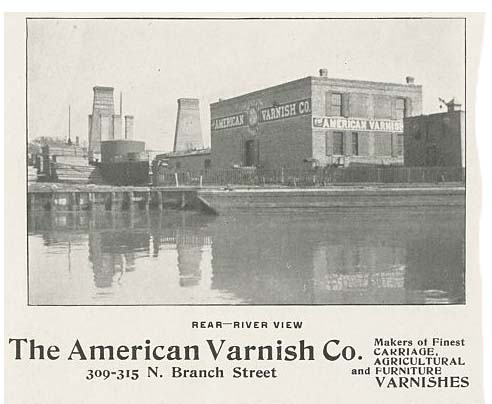
Theodore, now married to Mary Josephine Hemmer, became the sole proprietor of the large business. In 1892, however, Theodore left that all behind and joined the Board of the American Varnish Company as its secretary and by 1905 was the president. Theodore's wife Mary gave birth to Edwin Columbus Juergens (the youngest of four children) in Chicago on August 9 in the year of that city's World's Columbian Exposition of 1893—hence Edwin's middle name.

AVC
Advertising card for the American Varnish Company on Goose Island in Chicago showing the $20,000 one and two-story brick varnish factory built at 313-315 N. Branch in 1902—just down the street from their earlier sites. From the Encyclopedia of Chicago history website.

avc ad
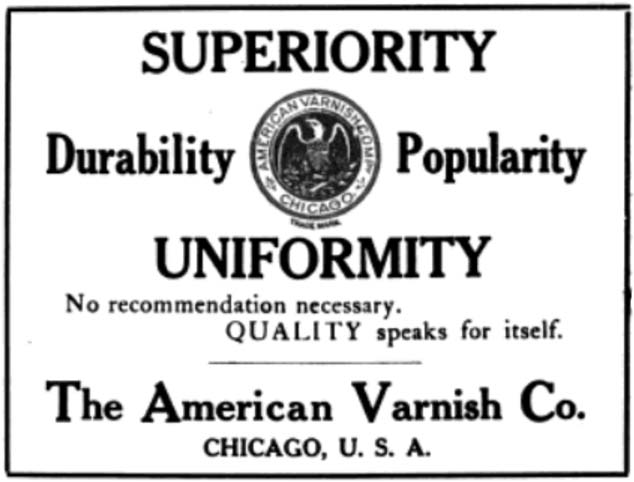
Repeating ad copy from the Chicago based Paint, Oil and Drug Review.

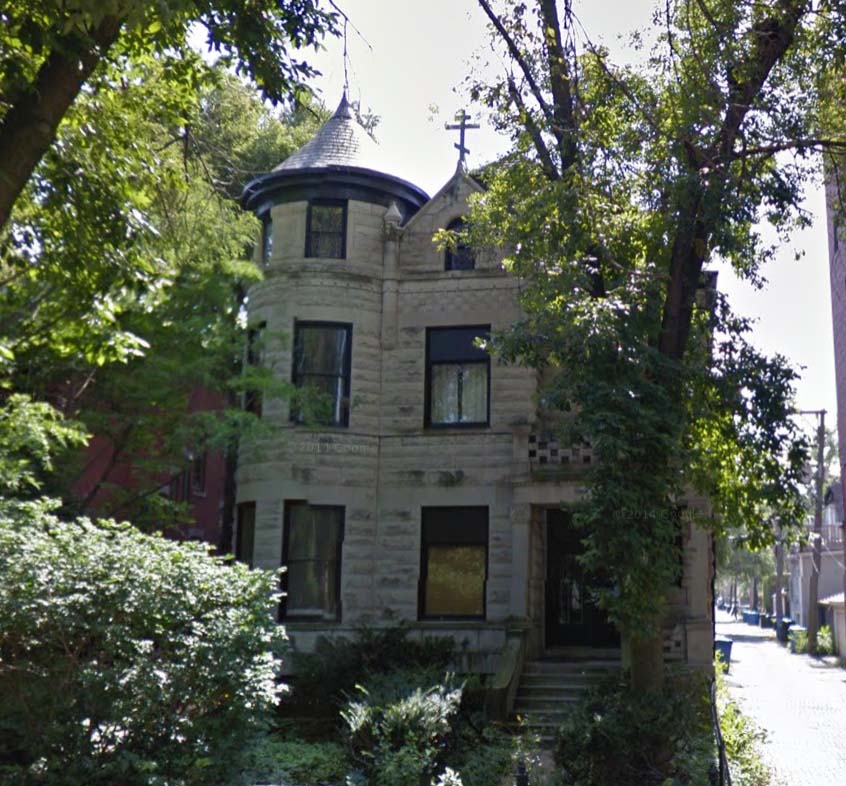
These years saw a rise in the family's fortunes, and Theodore soon moved them into an opulent Queen Anne mansion on Pierce Avenue that he had built in 1894-5. Today the house is divided into three apartments, but from the late 1950s until the early 1970s the Juergens mansion was owned by the Russian Orthodox Church Outside of Russia—also known as the Russian Orthodox Church Abroad—and was consecrated as The Holy Virgin Protection cathedral, with services held in what is now the front parlor of the second-floor apartment. A Russian Orthodox cross still graces the roof to this day.

T Juergens house
The Theodore Daniel Juergens house and former The Holy Virgin Protection cathedral at 2141 W Pierce Ave, Chicago, IL, 60622. Image from Google Maps Streetview,
recorded September, 2014. Note Russian Orthodox cross on roof.

In October of 1899, after the dilapidated Division Street bridge to Goose Island was closed, Theodore was one of nine men well-off enough to offer the City of Chicago a loan out of their own pockets for the construction of a new bridge. The city would "pay 6 percent interest on the money until such time as it could repay the business-men." In 1908 Theodore changed careers again, but this time changed industries as well, choosing one that would set the now 15 year-old Edwin on his own career path for the rest of his life. Theodore Juergens joined forces with Jacob Lauth of J. Lauth & Co. to manufacture cars and trucks.

To be continued with more on the Lauth-Juergens Motor Car Company.